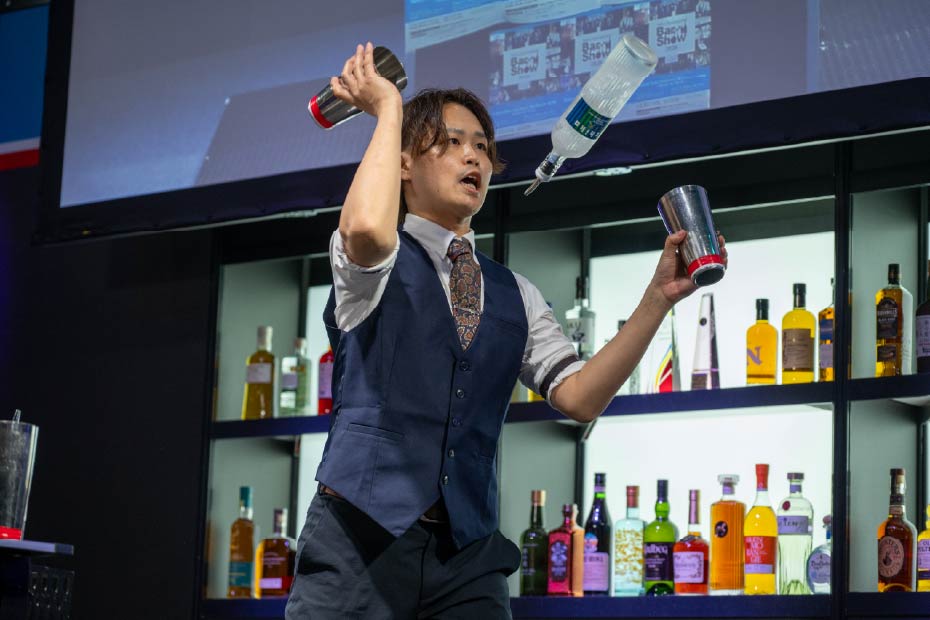
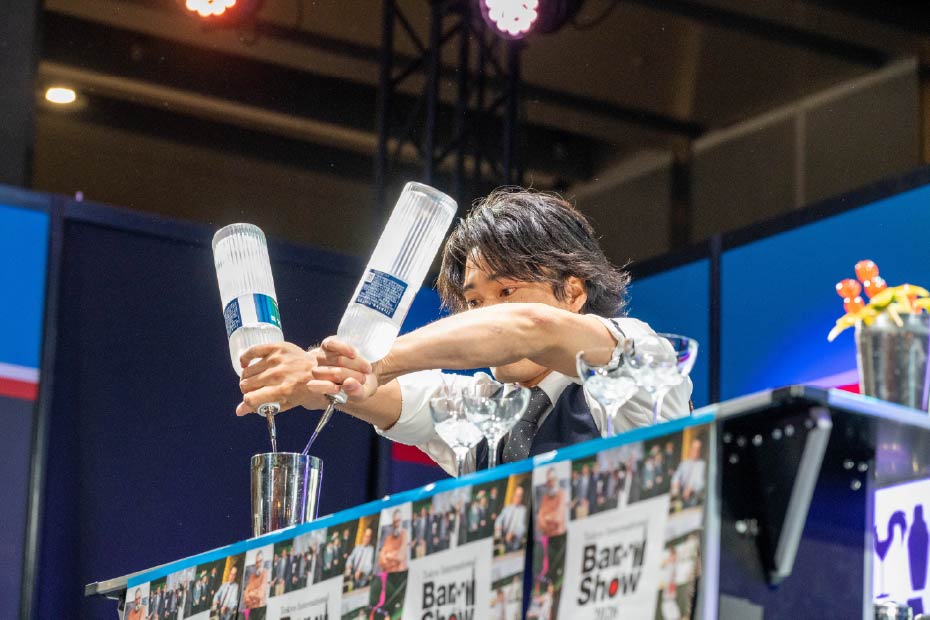
Topics & News
2026.08.27 EVENT REPORT / Tokyo International Bar Show 2026 – Smash the World
Bartenders Gather from Around the Globe! A Report on the Tokyo International Bar Show 2026, One of Japan’s Largest Bar Shows
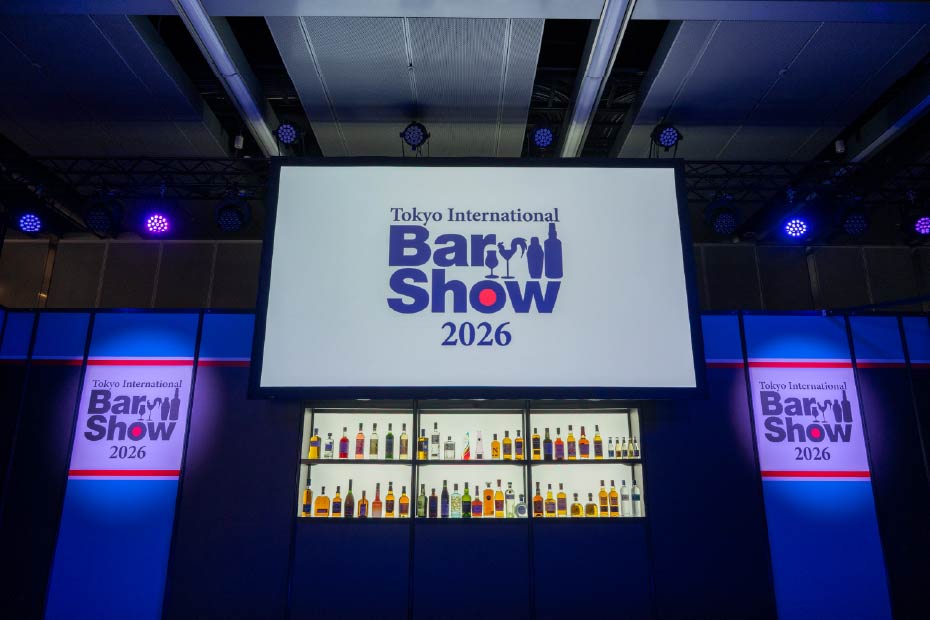
Held on Saturday, May 9 and Sunday, May 10, the Tokyo International Bar Show 2026, one of Japan’s largest bar events, took place at Tokyo Dome City Prism Hall. Marking its 12th edition this year, the event brought together a record 62 exhibitors. Brands and top bartenders from Japan and overseas presented one-day-only special performances and cocktails to visitors. This report captures the excitement of this vibrant event at the forefront of the bar and dining scene.
Text: Ryoko Kuraishi / Photography: Koichi Mitsui / Composition: Contentsbrain / English Translation: LIBER
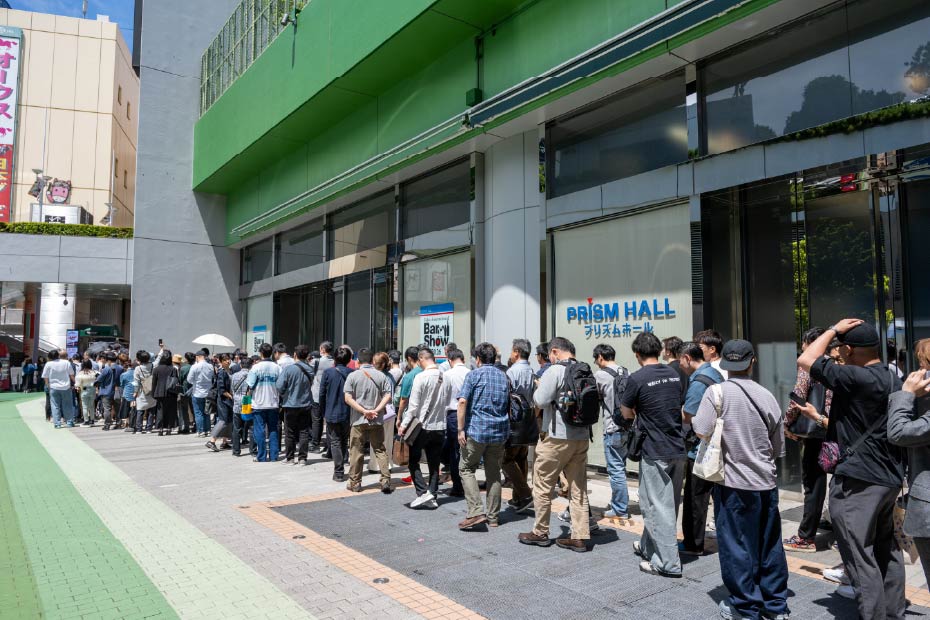
Held under the theme “Smash the World,” this year’s event reflected the Bar Show’s aim of sharing cocktail and bar culture from Tokyo with the world. Highlights included talk sessions featuring special guests Joerg Meyer, who travels the globe as a “traveling mixologist,” and renowned editor Dave Broom. The event also offered a diverse lineup of content, including masterclasses and flair bartending performances. On both days, large numbers of bar enthusiasts gathered before the doors opened, forming long lines at the entrance. Over the two days, the event attracted a total of approximately 13,900 visitors and was so popular that entry restrictions had to be imposed.
At the booths of participating brands, visitors were treated to far more than tastings, with visually striking presentations using projection mapping and video, as well as guest shifts by some of the world's top bartenders, creating memorable cocktail experiences.
Showcasing the Potential of WA-SPIRITS to Bar Enthusiasts
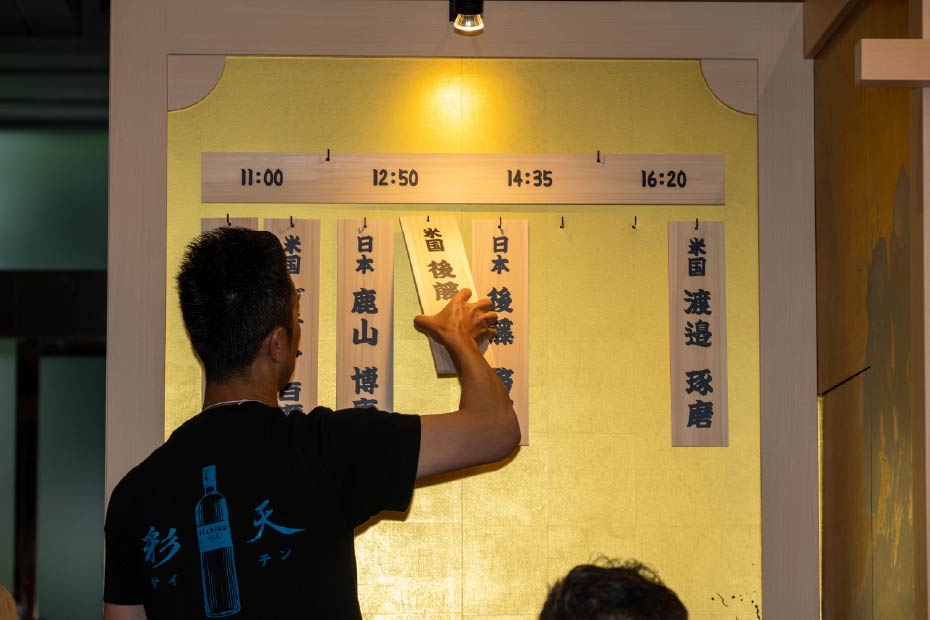
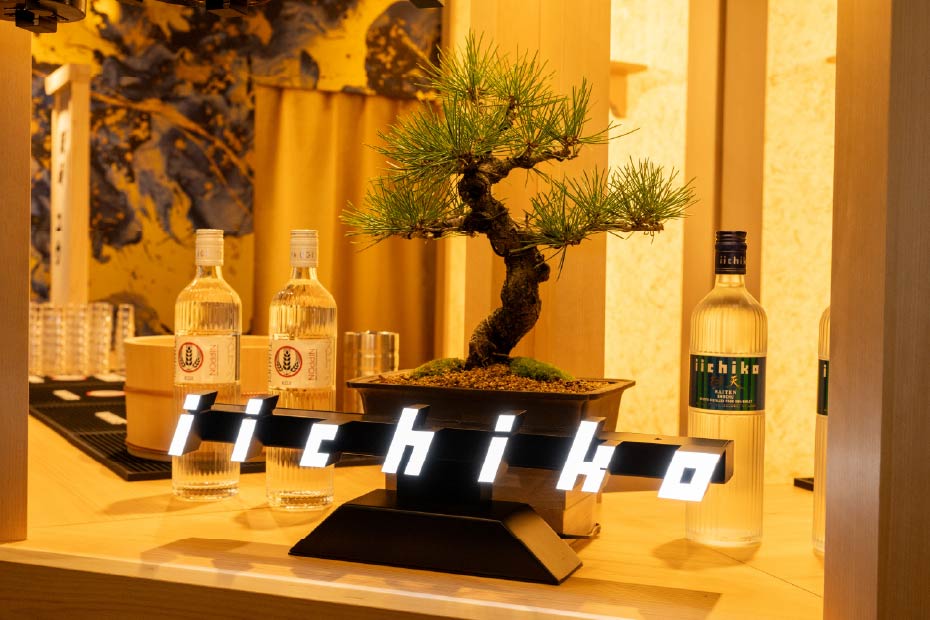
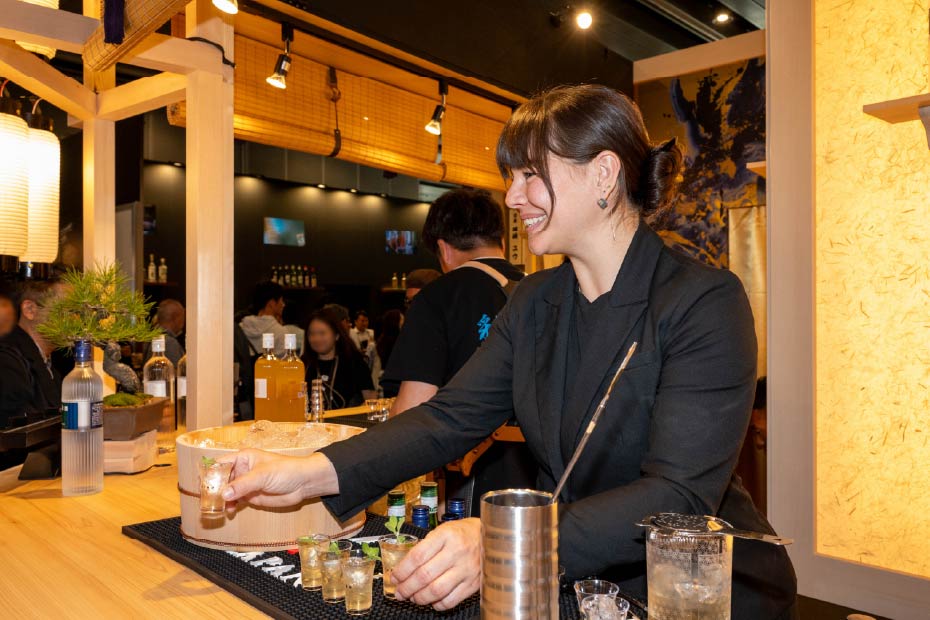
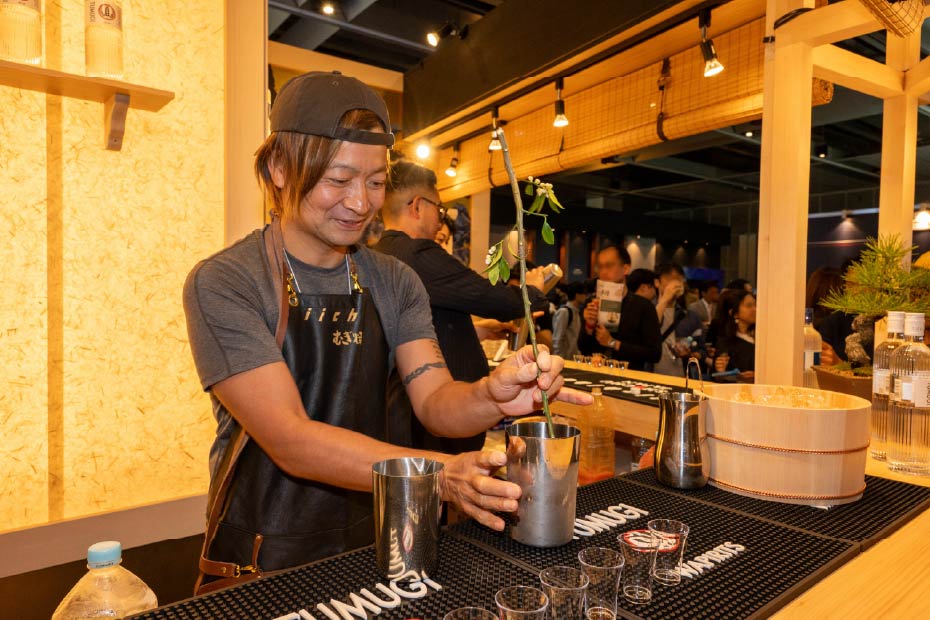
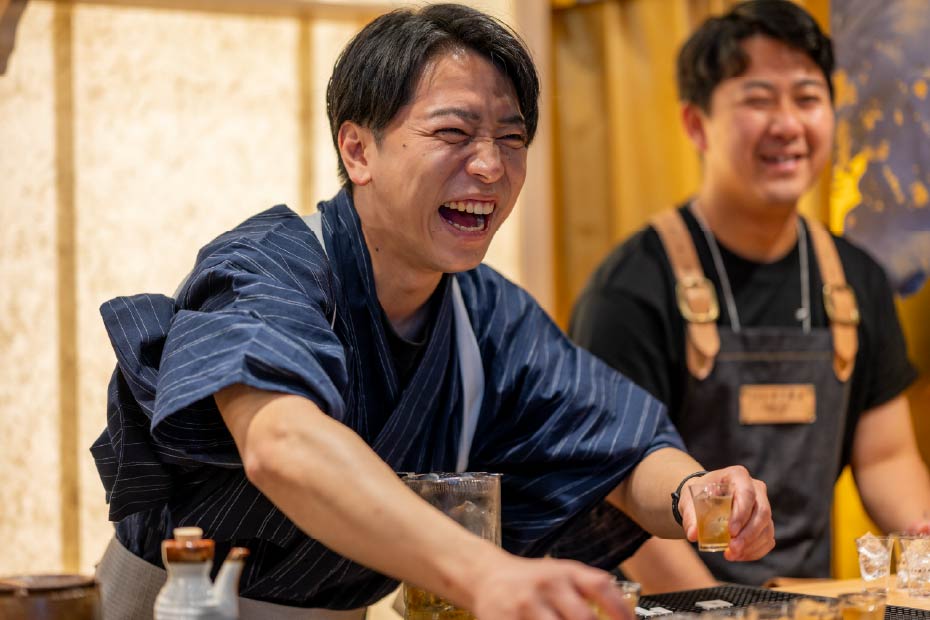
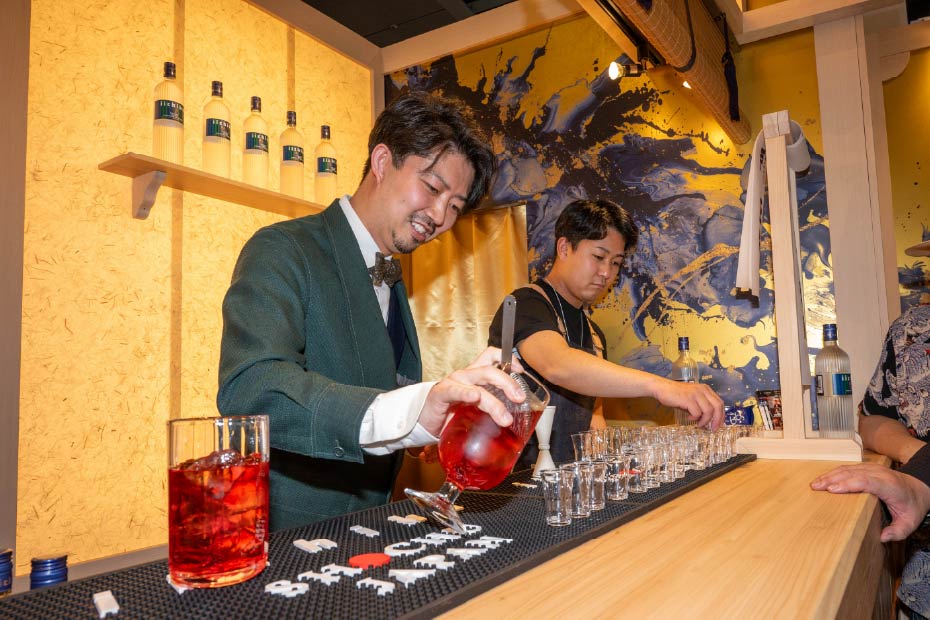
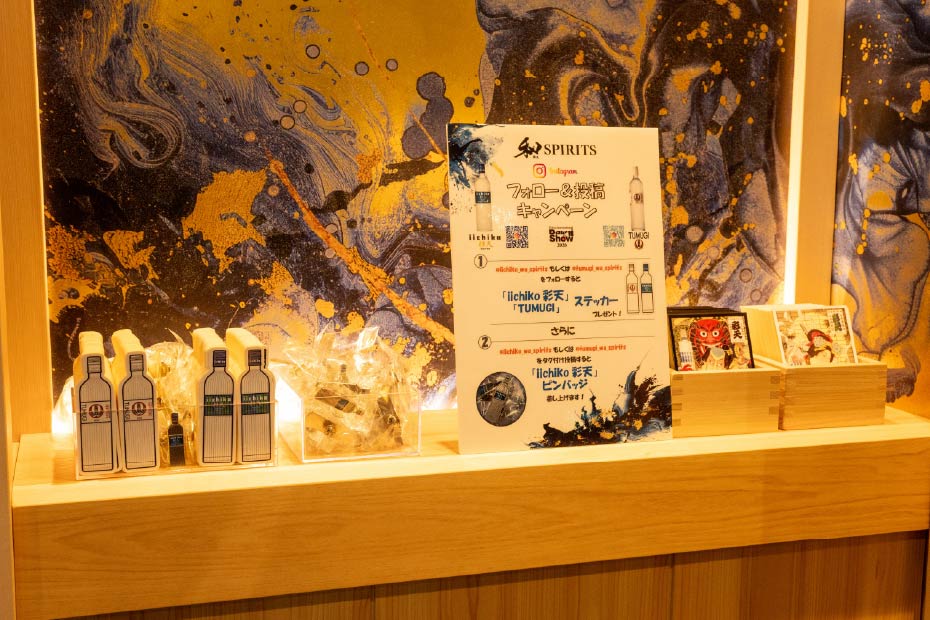
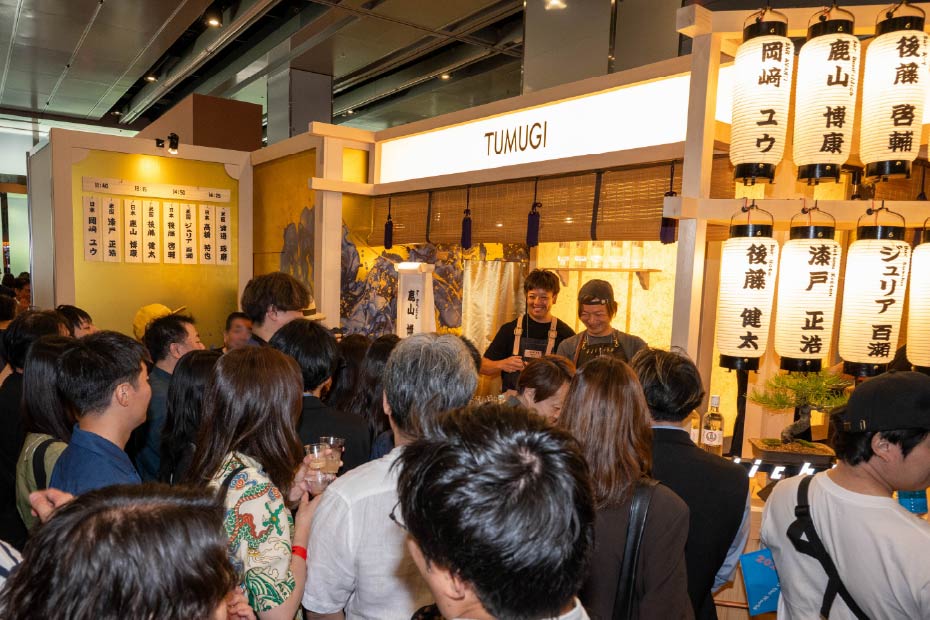
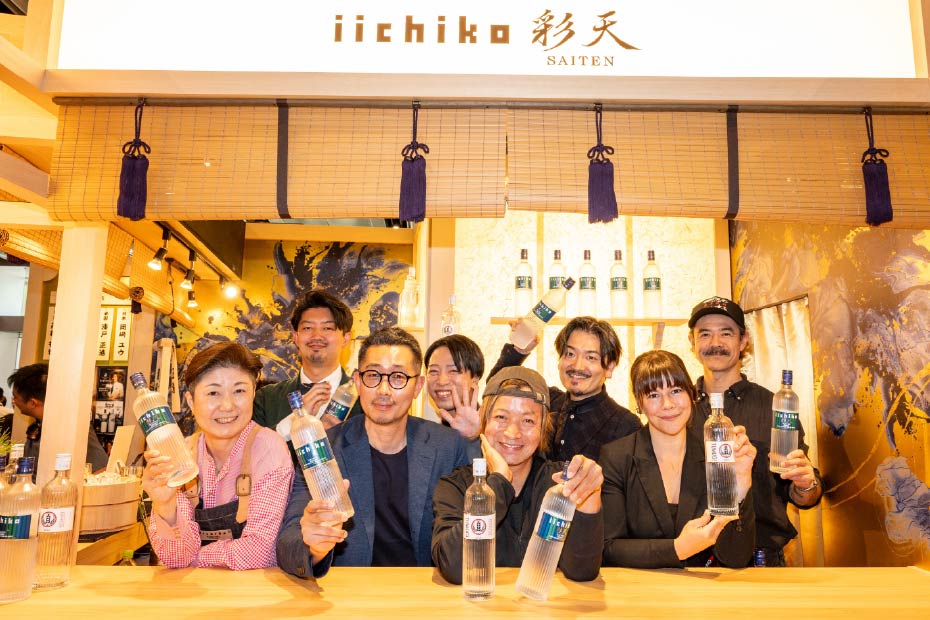
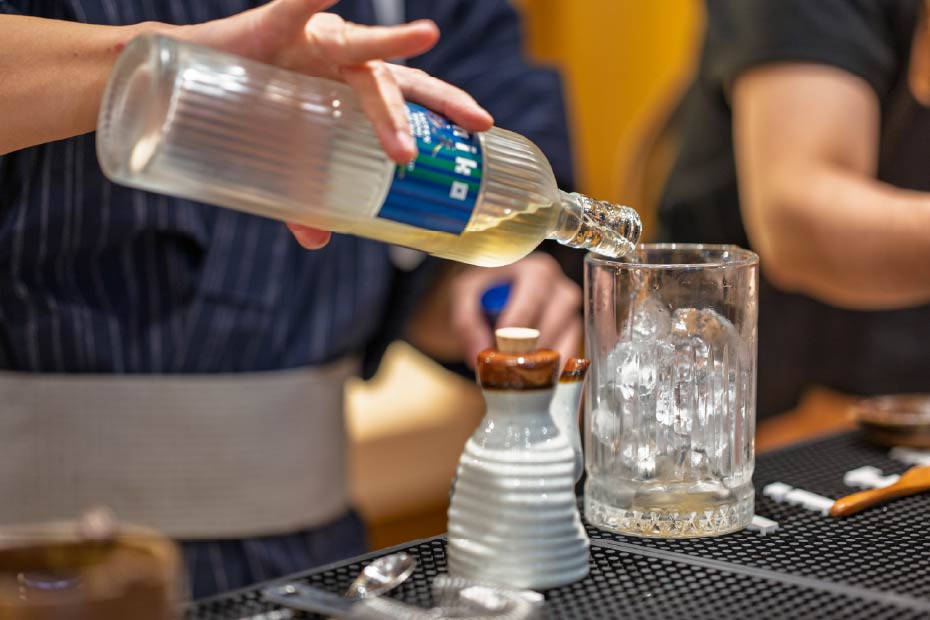
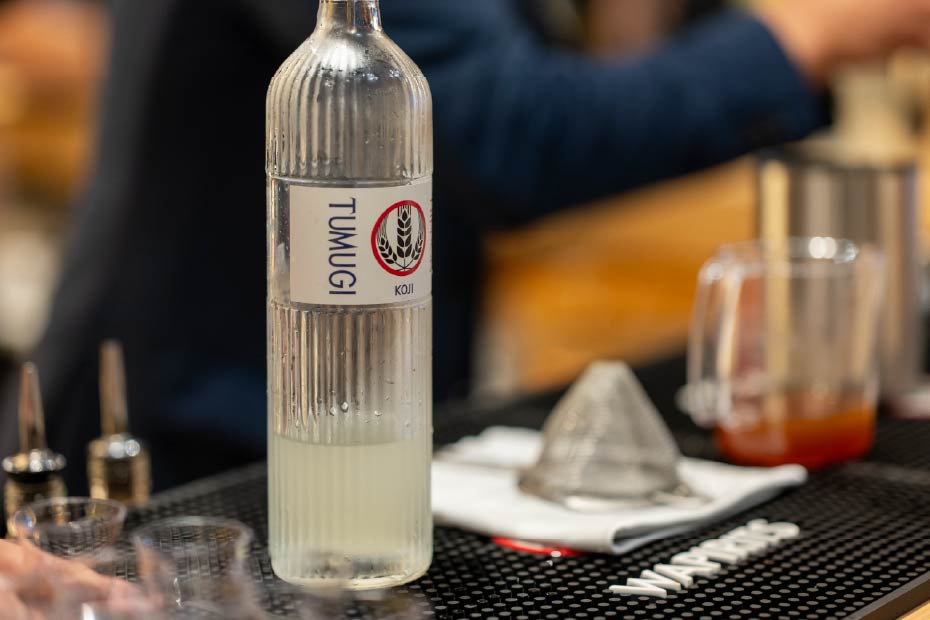
Sanwa Shurui, which shares WA-SPIRITS with the world, created a pale wood booth reminiscent of a traditional Japanese stage and served cocktails made with TUMUGI, which was relaunched this year with a renewed bottle design, and iichiko Saiten, which made its debut in Japan last year. The cocktails were crafted by renowned Japanese and U.S.-based bartenders familiar to bar enthusiasts. “We wanted visitors to experience each bartender’s interpretation of WA-SPIRITS through this collaboration between top bartenders from Japan and the U.S.,” said Monta Inoue of Sanwa Shurui’s Sales and Marketing Division. Here is a look at the performances from the event.
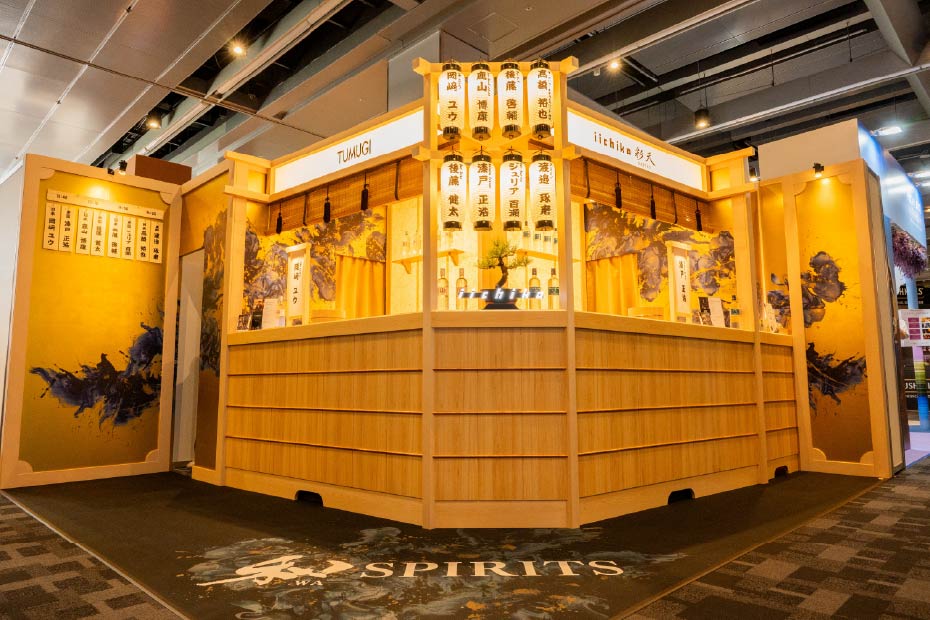
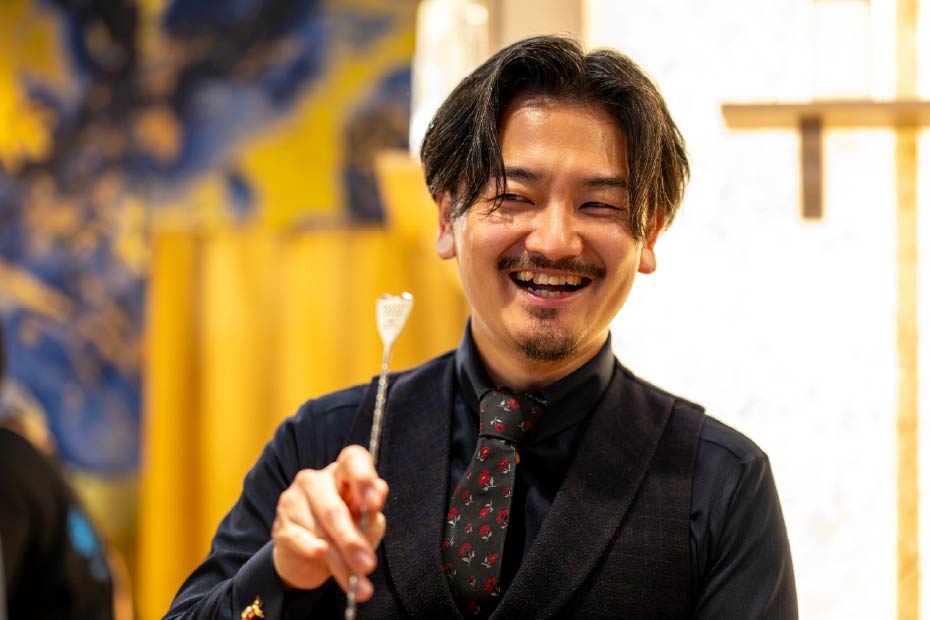
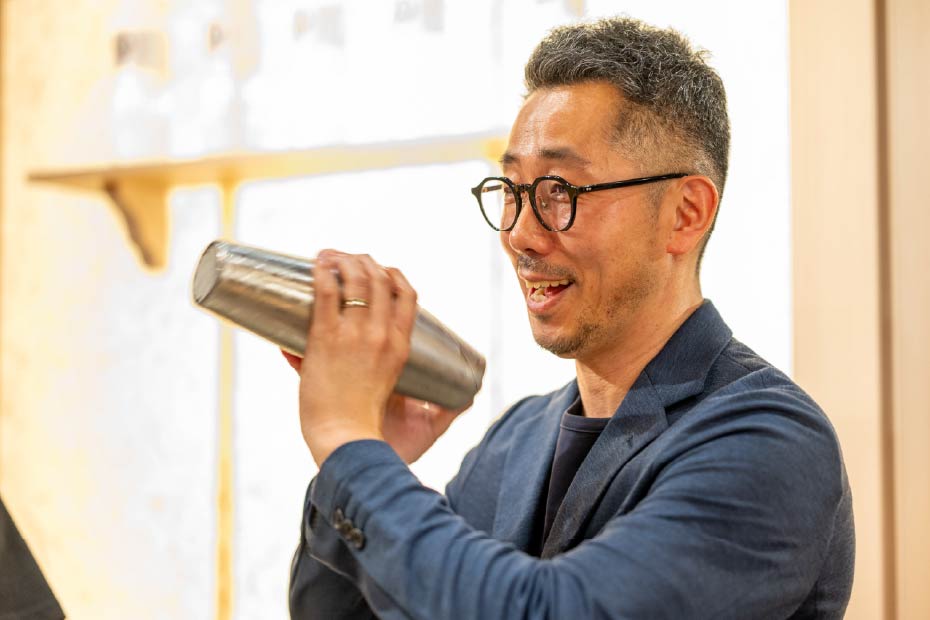
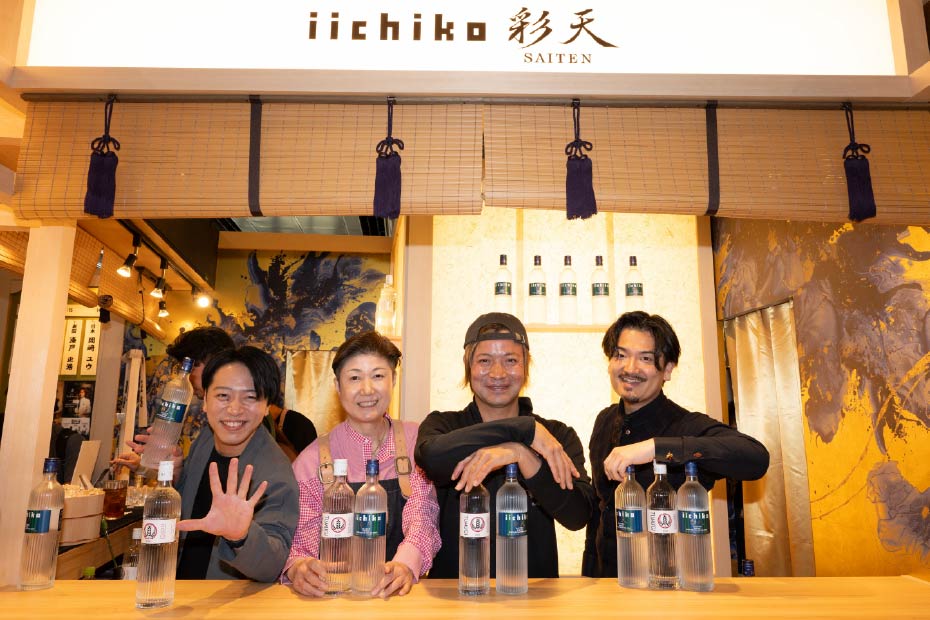
For this year’s performances, eight bartenders who routinely work with iichiko Saiten and TUMUGI in their cocktails came together at the booth to showcase their skills. The Japan-based bartenders were Yuu Okazaki from BAR AVANTI in Ginza, Tokyo; Hiroyasu Kayama from Bar BenFiddich in Shinjuku, Tokyo; Keisuke Goto from Bar K-9 in Nagoya, Aichi; and Yuya Takahashi from The Kahala Hotel & Resort Yokohama in Yokohama, Kanagawa. From the U.S. came Masahiro Urushido from Katana Kitten in New York; Kenta Goto from Bar Goto in New York; Julia Momosé from Bar kumiko in Chicago; and Takuma Watanabe from Martiny’s in New York.
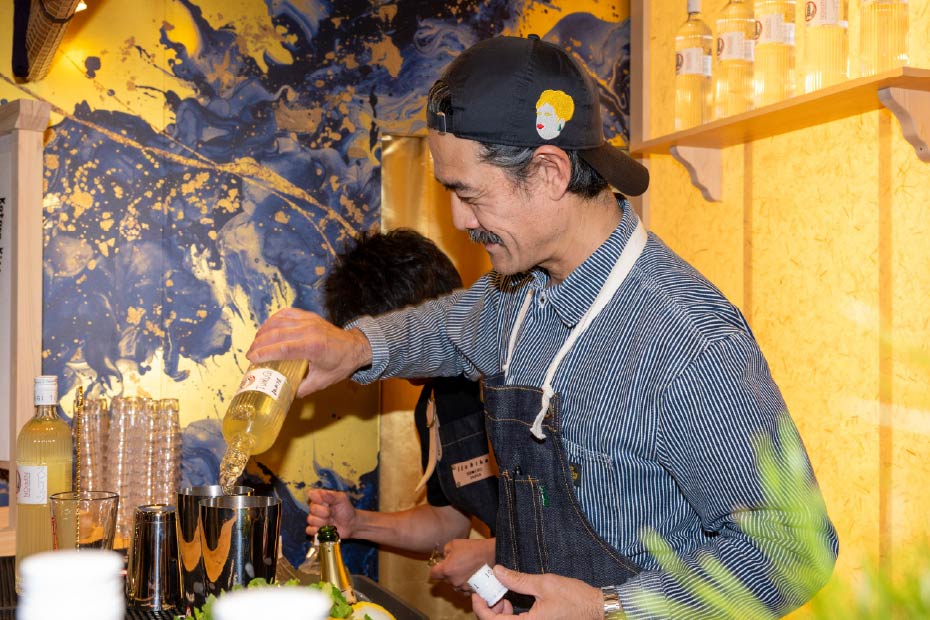
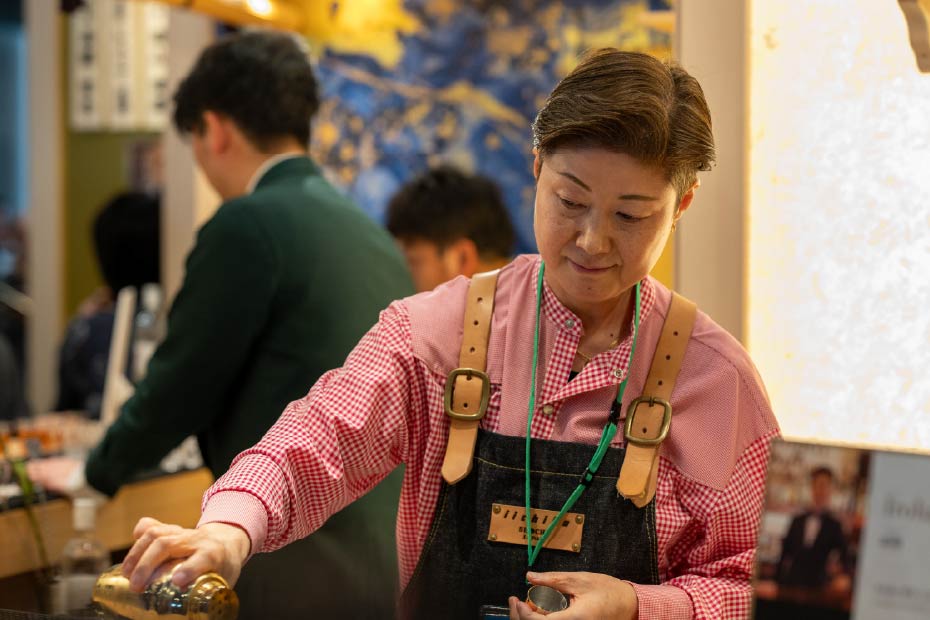
Over the course of the event, the eight bartenders were divided into four time slots, with one Japan-based bartender and one U.S.-based bartender standing behind the counter in each slot to craft cocktails. On the first day, the Japan-based bartenders served cocktails made with TUMUGI, while the U.S.-based bartenders served cocktails made with iichiko Saiten. On the second day, the Japan-based bartenders used iichiko Saiten, while the U.S.-based bartenders used TUMUGI.
Here, we introduce the two recipes created by each bartender and the key points behind them, starting with the Japan-based bartenders.
Cocktails by Yuu Okazaki of BAR AVANTI
TUMUGI Presso
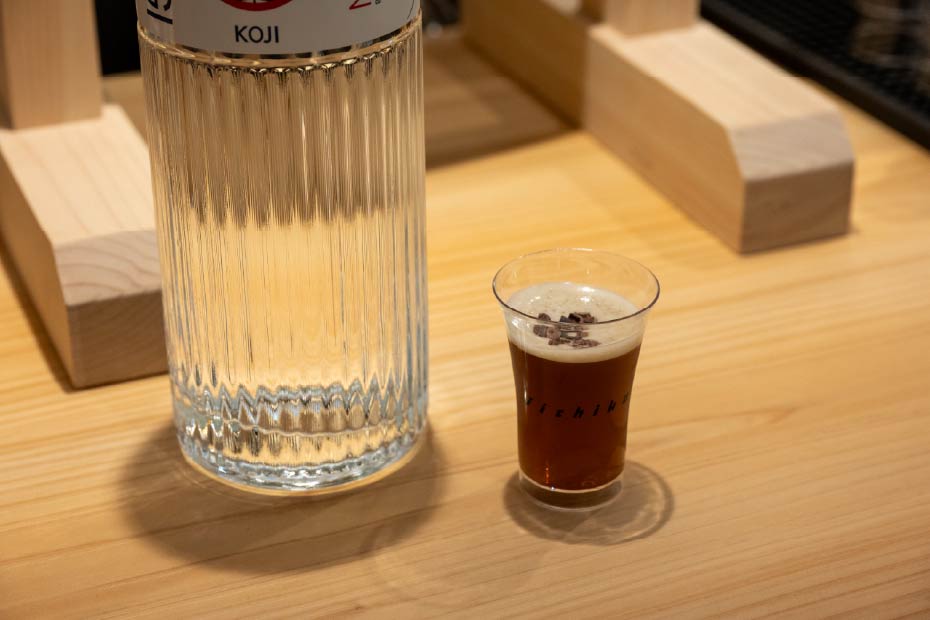
“This cocktail was created to make coffee cocktails, which can sometimes feel as though one glass is enough, lighter and more enjoyable to the last sip. Sansho powder tempers the sweetness and creates a lingering finish, while cacao nibs add a slight bitterness. I wanted to bring the fullness of TUMUGI to the fore,” said Okazaki.
The light passion fruit enhances TUMUGI’s citrus notes, giving the cocktail a refreshing quality that makes it perfect as a first drink.
Iroha (written with characters referencing iichiko Saiten and “bright day”)
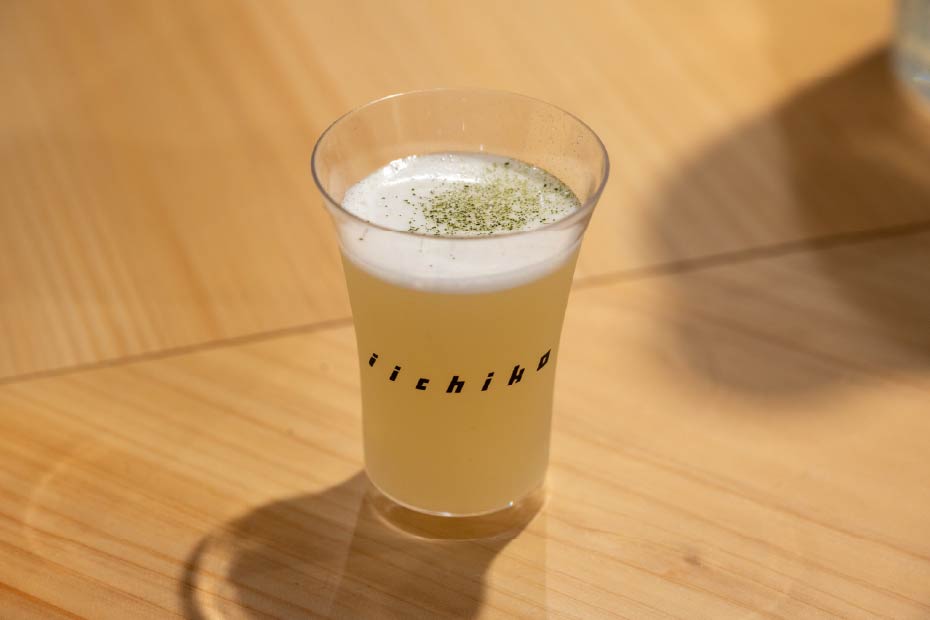
“iichiko Saiten is known for its robust alcohol presence, but milk-washing gives it a mellow, clear mouthfeel while preserving the fullness and lingering flavor derived from koji. This recipe is somewhat elaborate, but at BAR AVANTI, simple serves such as a Rickey (lemon and soda) are also very popular,” said Okazaki.
Cocktails by Hiroyasu Kayama of Bar BenFiddich
Koji Watermelon Summer
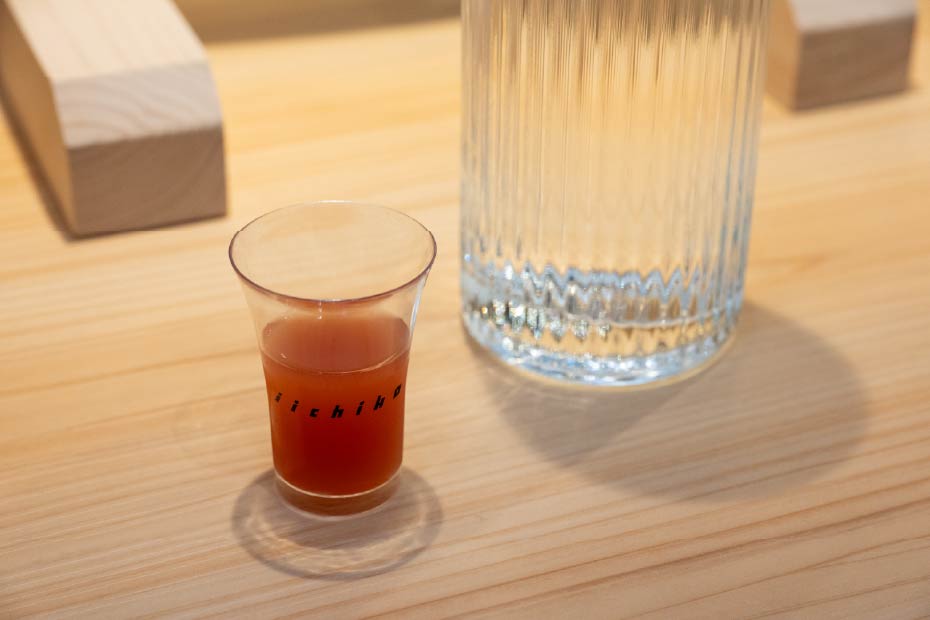
“This is a cocktail we often serve at Bar BenFiddich using iichiko Saiten, but this time I made it with TUMUGI. I use watermelon in this cocktail as well because I feel that its aroma pairs beautifully with koji. TUMUGI’s appeal lies in its unique flavor, which combines the strength of koji with a botanical character. It is distinctive yet also elegant, and I find it a very easy spirit to use in cocktails,” said Kayama.
Kayama also noted that “TUMUGI pairs well with melon-type fruits and vanilla, making it a great base for long cocktails and dessert cocktails.”
Irodori Kajitsu (referencing iichiko Saiten and “fruit”)
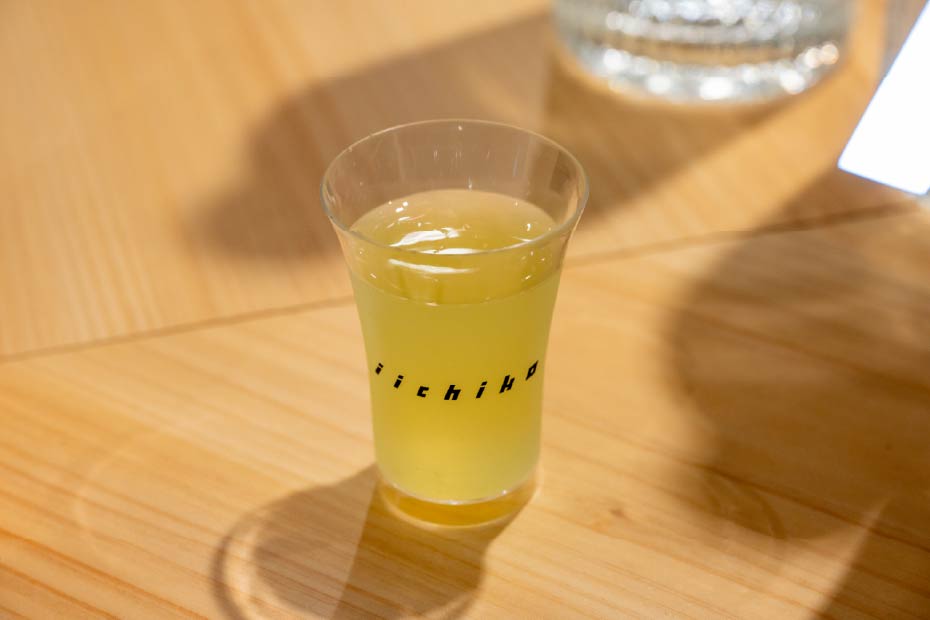
Kayama said that, for Irodori Kajitsu, he focused on the overall balance of the drink.
“As the name suggests, this cocktail brings together koji and fruit. I often use TUMUGI in long cocktails, but iichiko Saiten works well in a rocks-style serve. In addition to melon-type fruits, as in Irodori Kajitsu, it also pairs beautifully with dessert cocktails made with rich vanilla flavors or cream,” he said.
Cocktails by Keisuke Goto of Bar K-9
Re: TUMUGI
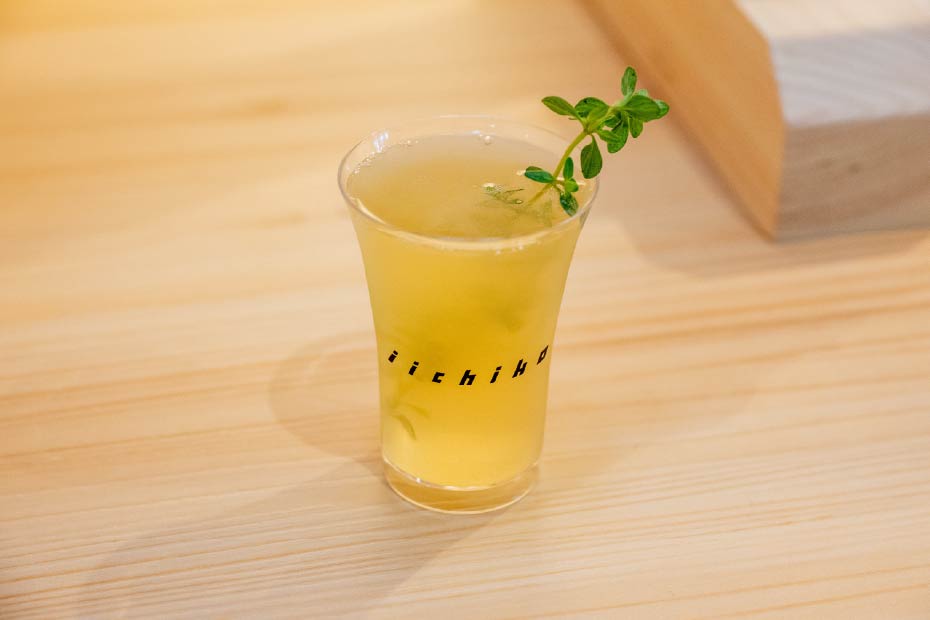
“I was thinking about Japanese ingredients that would pair well with TUMUGI, and mugwort came to mind. I wanted to build the cocktail around a distinctly Japanese, delicate, yet hard-to-describe flavor, bringing together the koji character of TUMUGI and mugwort tea. Lillet Blanc, which adds acidity and sweetness, and cacao white, with its sweet aroma, are a familiar pairing in cocktails, but combining them with the fullness of koji and the faint bitterness of mugwort creates a nuance that feels far from ordinary.
The ‘Re:’ in the cocktail’s name means ‘return.’ With Saiten now attracting attention in the cocktail scene, I wanted to say, ‘Don’t forget about TUMUGI too!’ So I named it Return,” laughed Keisuke Goto.
Seisai (referencing iichiko Saiten and “serenity”)
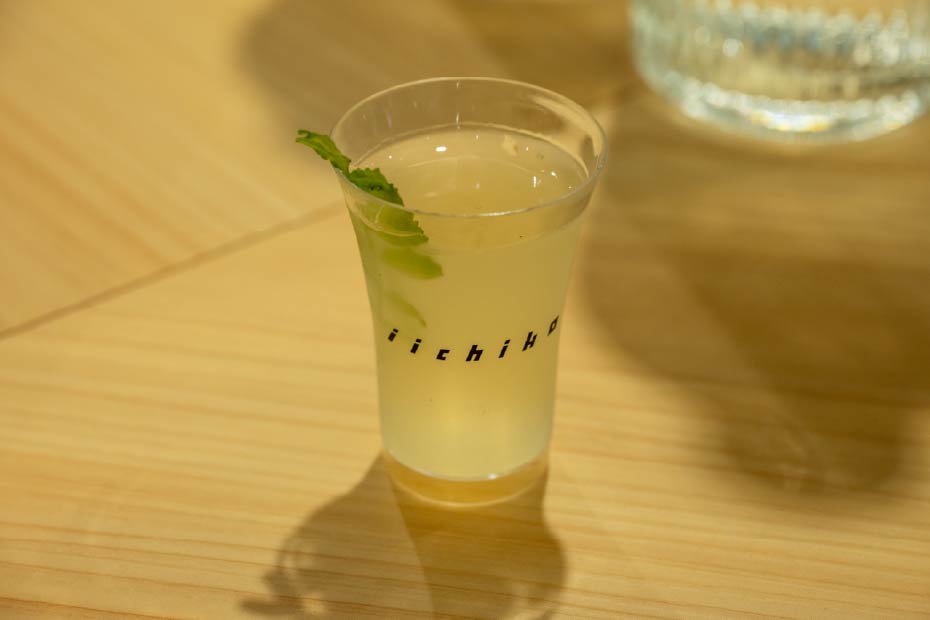
Seisai is a “drinkable dessert” that makes the most of the aroma of barley. Because it is fat-washed with white chocolate, a sweet chocolate aroma rises softly from the glass.
“iichiko Saiten has a unique maltiness reminiscent of barley chocolate and puffed rice snacks, giving it a flavor that feels somehow nostalgic to Japanese people. Breaking down these individual elements opens up a wider range of cocktail possibilities,” said Goto.
Cocktails by Yuya Takahashi of The Kahala Hotel & Resort Yokohama
Wow Tumugi Soda (Wa-o Tumugi Soda)
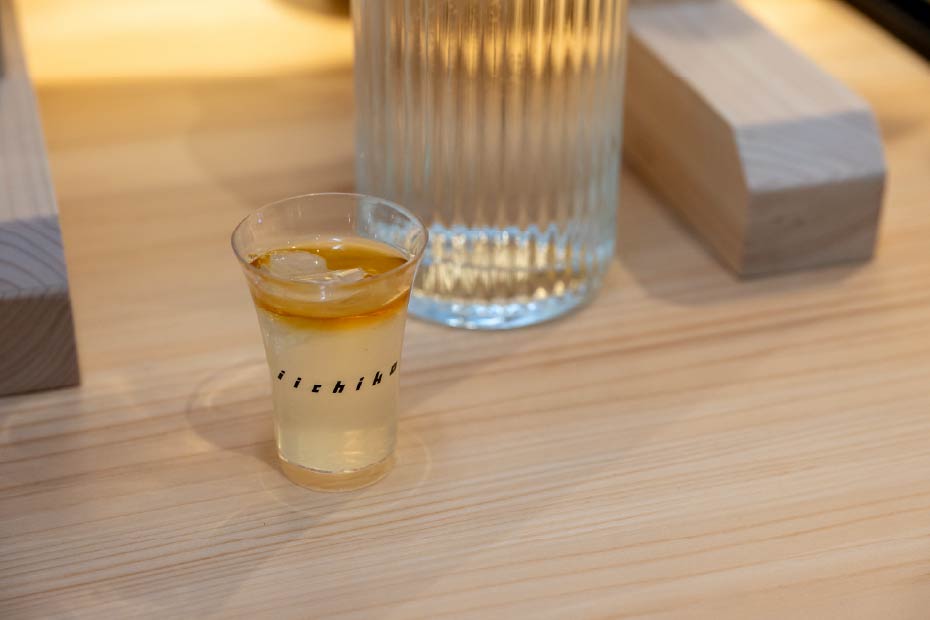
“TUMUGI is paired with the refreshing character of yuzu and topped with soda. Bénédictine, a slightly spicy French herbal liqueur with a mint-like aroma, amplifies the umami of koji,” said Takahashi.
On TUMUGI, Takahashi added, “While its botanical composition is similar to gin, it is an entirely different spirit. The key when developing the recipe was finding a way to express the nuances of koji and the character of shochu as defining qualities of a Japanese spirit.”
“Yuzu may be a classic choice, but that is how I expressed it in this cocktail. In fact, there is also a hidden theme: weaving together the wa of three countries—Japanese yuzu liqueur, French Bénédictine, and Italian Fernet-Branca—to represent Sanwa, literally ‘three wa’,” he said.
Oedo Fashioned
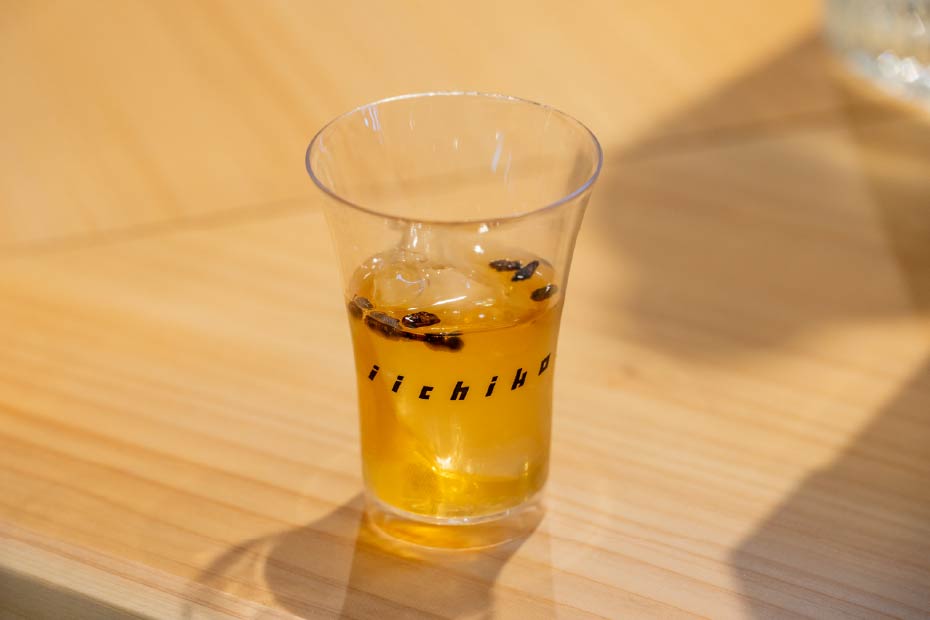
“For Japanese bartenders, it is a great pleasure to express our creativity through Japanese spirits. For the cocktail’s supporting ingredients, I focused on traditional Japanese ingredients that have existed since the Edo period: mirin, soy sauce, rice, and shochu. I created the cocktail with ingredients that overseas bartenders can easily incorporate, in the hope that it will become a standard honkaku shochu-based cocktail,” he said.
Next, we introduce cocktails by bartenders working in New York and Chicago. In creating recipes using TUMUGI, which is not yet available in the U.S., they seem to have made unexpected discoveries by breaking down the elements of this spirit from various angles.
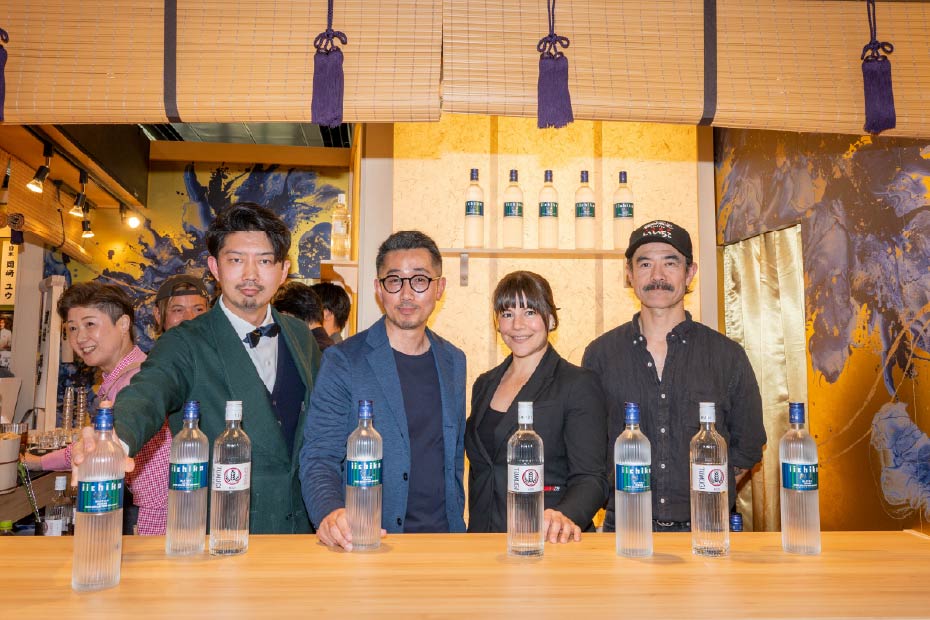
Cocktails by Masahiro Urushido of Katana Kitten
Fancy Mugicha
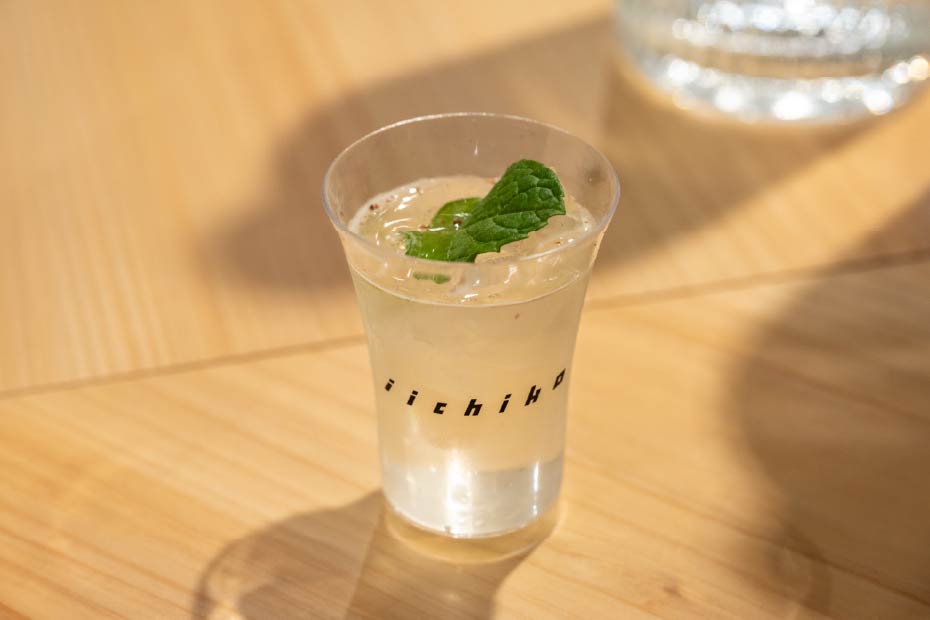
“When tasting TUMUGI, I sense grapefruit-like citrus aromas layered with spice notes such as cinnamon and a lingering koji finish. I wanted to create a punch-style cocktail that would allow these elements to be enjoyed together,” said Urushido.
The result was a refreshing drink with aromas of roasted barley, citrus, spice, and jasmine, making it perfect for its afternoon serving slot.
Meguroni
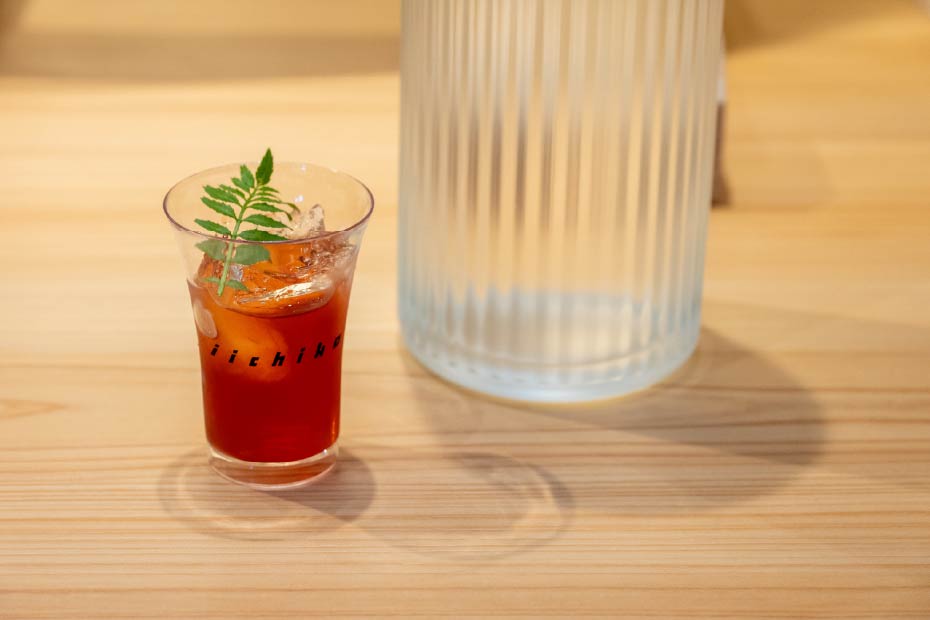
“By replacing the base spirit of the Negroni with iichiko Saiten, the umami of koji gives the cocktail added depth. The key is adding brown sugar umeshu (Japanese plum liqueur) for a Japanese flavor, DeGroff Bitter Aperitivo DeGroff Bitter Aperitivo, an Italian-style bitter liqueur, as a bitter accent, and genever, a Dutch-born spirit flavored with botanicals such as juniper berries, to act as a bridge with iichiko Saiten,” said Urushido.
Cocktails by Kenta Goto of Bar Goto
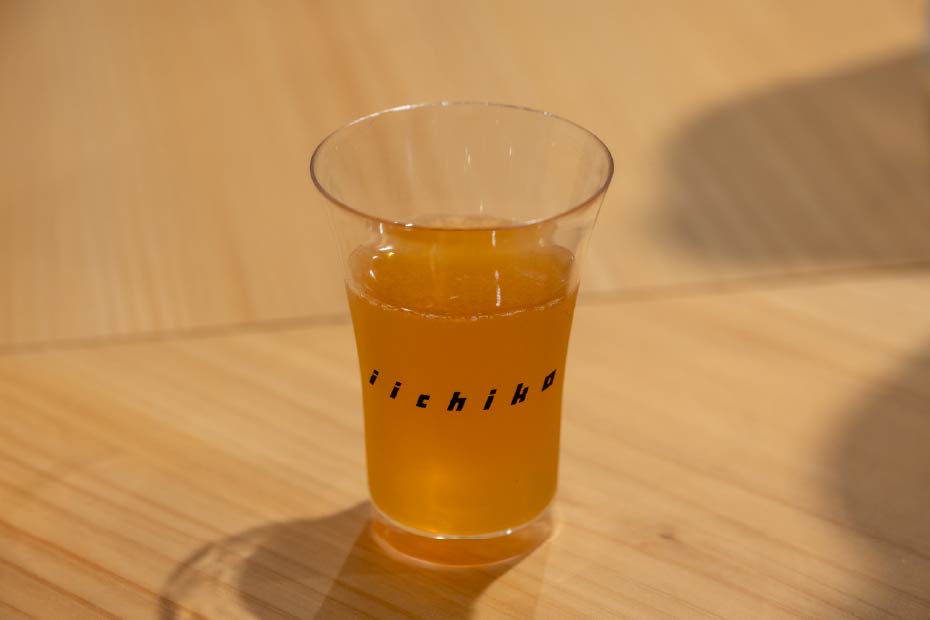
Bergamot & Koji
Umami Mary
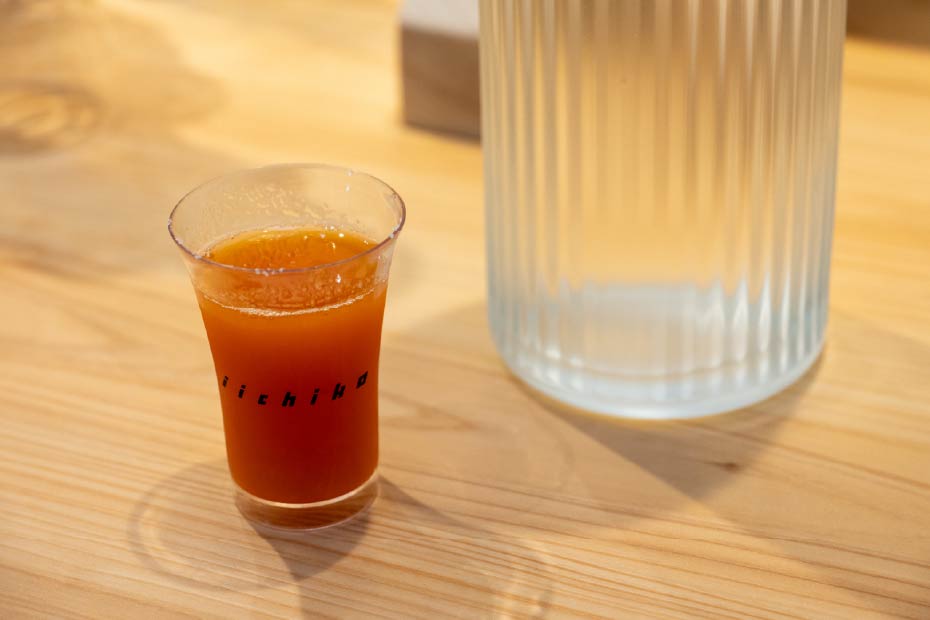
The key to this cocktail is its use of two types of honkaku shochu. It uses iichiko Silhouette infused with dashi as its base, while iichiko Saiten is added almost like a seasoning to bring greater depth to the flavor.
“iichiko Saiten is characterized by the rich and complex flavors derived from koji, which is both what makes it interesting and what makes it challenging. For this recipe, I initially wanted to infuse iichiko Saiten with dashi flavors, but its base character is so powerful that it was difficult to layer additional flavors onto it. Instead, I used two different iichiko expressions and combined them with dashi prepared separately. I then balanced the cocktail with tomatoes from Oita, lemon, and salt. Personally, I think iichiko Saiten pairs well with slightly bitter flavors such as celery, as well as comforting, warming flavors like coffee, chocolate, and cream. I enjoy exploring these possibilities through a variety of recipes,” he said.
Cocktails by Julia Momosé of Bar kumiko
Rose
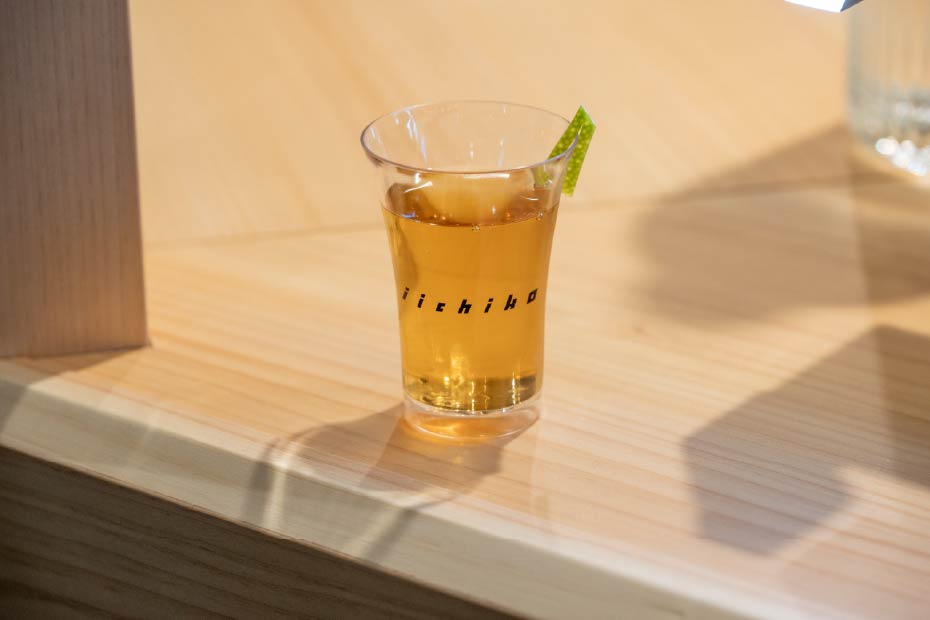
According to Momosé, TUMUGI belongs to an entirely different category of spirits from honkaku shochu, with a completely distinct flavor profile and character. Rose, her cocktail featuring TUMUGI, uses rose and sherry to highlight TUMUGI’s fruity umami and elegant aromas.
“I wanted to express the life cycle of a rose in a cocktail—from bud to bloom, and finally to a dried flower. The garnish is lime peel. Its vibrant aroma and subtle saltiness enhance the drink, while its vivid green color beautifully complements the reddish hue of the cocktail,” said Momosé.
Tomato
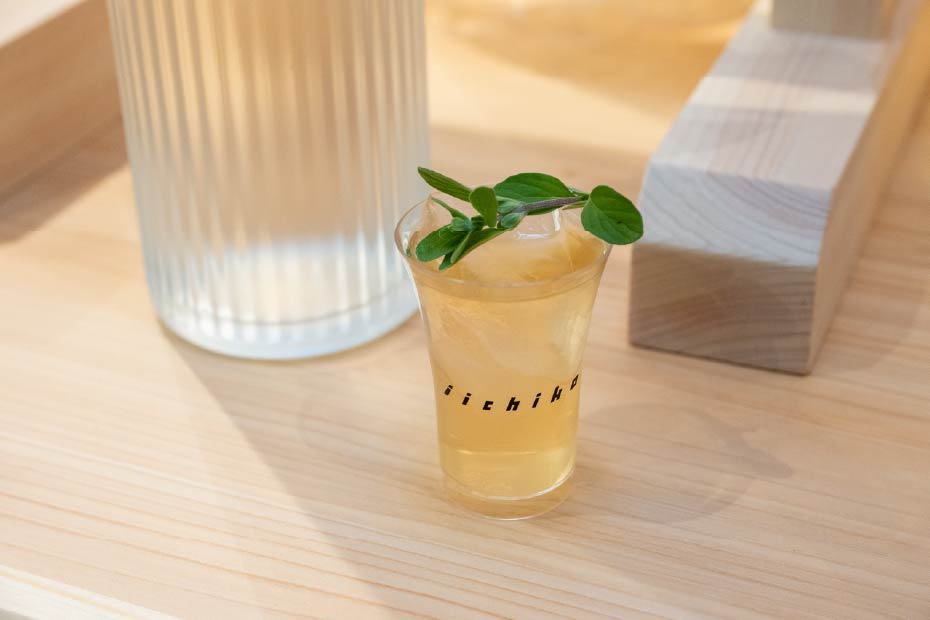
“As this was a May event, I wanted to create a cocktail that was light, approachable, and easy to drink. Homemade tomato water provides umami, acidity, and sweetness; Carpano Bianco, a sweet vermouth with pronounced sweetness and floral aromas, adds layers of sweetness; and Sauternes, a sweet white wine from Bordeaux and one of the world's three great noble rot wines, contributes fresh fruitiness,” she said.
“For bartenders, being able to create cocktails with a new category of spirits derived from koji is a tremendous opportunity,” said Momosé.
Cocktails by Takuma Watanabe of Martiny’s
Orangetini
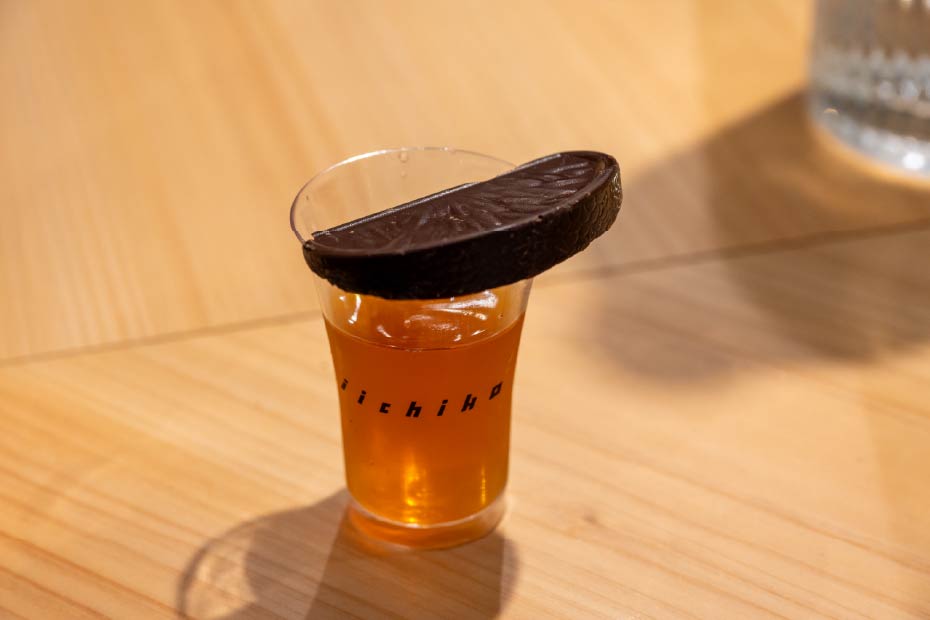
Orangetini recreates in cocktail form the experience of enjoying orangettes—candied orange peel coated in chocolate—with black tea.
“At Martiny’s, we serve this cocktail with a gin base, but for this version I changed the base spirit to TUMUGI. I think the tea, chocolate, and orange nuances pair beautifully with TUMUGI, which combines a gin-like botanical character and citrus aroma with koji-derived umami not found in gin,” said Watanabe.
Koji de Dolce
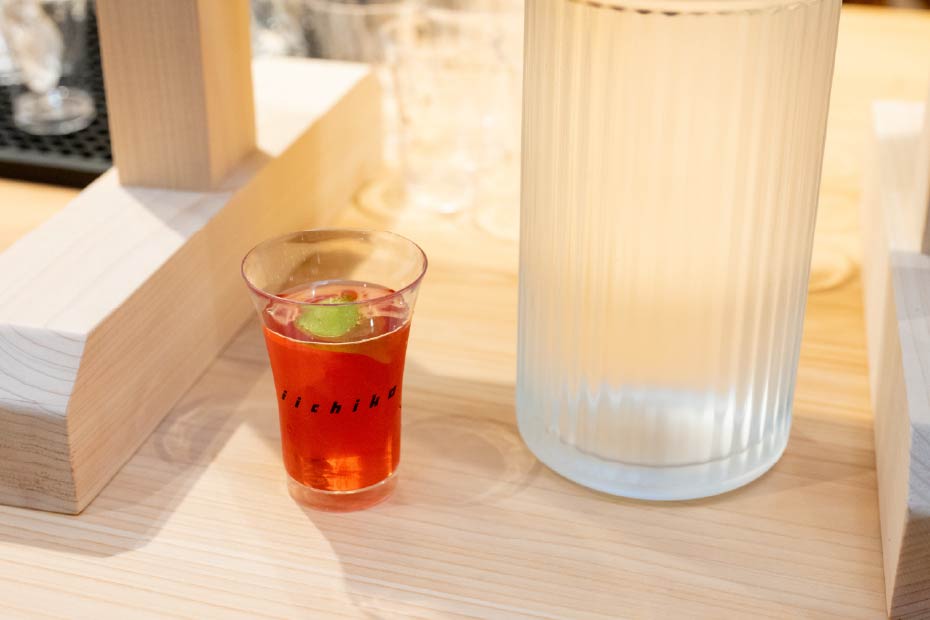
“iichiko Saiten is a well-structured spirit with a complexity that appeals to connoisseurs, making it perfect as a base for cocktails with an edge. I wondered what would happen if I used ingredients other than citrus to add acidity and fruitiness, and on a whim, I tried infusing it with hibiscus. It worked even better than expected.
When I added the nutty flavor of Nocello, a slightly green, banana-like nuance emerged, so I turned it into something similar to a Banana à la Mode for adults. It is sweet but not too sweet, with a complex, layered harmony of aromas to enjoy,” said Watanabe.
Taking WA-SPIRITS to the World!
Growing Momentum Following UNESCO Intangible Cultural Heritage Recognition
Interest in Japanese spirits continues to grow following the inscription in 2024 of Japan’s “traditional knowledge and skills of sake-making with koji mold,” including honkaku shochu and sake made using koji mold, on UNESCO’s Representative List of the Intangible Cultural Heritage of Humanity. Against this backdrop, the response from visitors was overwhelmingly positive. Recognition of iichiko Saiten, which arrived in Japan from the U.S. market in 2025, is also growing among bar enthusiasts as a cocktail base spirit, generating comments such as, “So this is what it tastes like,” and “It has more alcoholic intensity than I expected.”
Meanwhile, some visitors remarked that TUMUGI reminded them of gin, owing to its clean bottle design. Its botanicals—kabosu and mint from Oita, yuzu from Shikoku, lemon from the Seto Inland Sea region, and mikan from Mikkabi—are Japanese citrus fruits and herbs that would not seem out of place in a gin. However, the rich lingering finish created by koji is something that Western spirits cannot replicate. After tasting the cocktails, some visitors even requested the opportunity to try TUMUGI neat. It seemed that many bar enthusiasts came away with a renewed appreciation of the potential of WA-SPIRITS in the cocktail scene.
The WA-SPIRITS-based cocktails, each reflecting the unique interpretation of one of the eight bartenders, proved a highlight of the event. Sanwa Shurui has exhibited at the Bar Show with the goal of promoting WA-SPIRITS, and Monta Inoue of the Sales and Marketing Division says that in recent years the company has begun to feel both growing awareness and tangible momentum.
“While overseas bartenders are expressing koji character more directly through ingredients such as dashi and other umami-rich elements, I was fascinated to see Japanese bartenders creating layers of complexity through unexpected combinations. Even in standard cocktails, simply replacing the base spirit with honkaku shochu can bring out the depth and complexity derived from koji. Through these performances, I think we were able to demonstrate that it offers a different kind of appeal from whisky, gin, or rum,” said Inoue.
While awareness of honkaku shochu-based cocktails has spread among leading bartenders in Japan and overseas, the next goal is to introduce them to a broader range of bars and restaurants.
Reflecting on the two-day event, Yasuhiro Hisatsune of the Sales and Marketing Division believes that, in Japan, having bartenders who can articulate the differences between shochu and Western spirits feature these products is creating new opportunities to reach different audiences.
“Over the course of the two day exhibition, I felt that bar enthusiasts have become increasingly familiar with iichiko Saiten as a shochu. Going forward, we want to communicate more actively about what shochu is, how different ingredients create different flavor profiles, and the potential that shochu has to offer.
Our goal is to see bottles of shochu lined up behind bars in cities around the world. To achieve that, we want to build on the momentum of the cocktail competition that began last year and eventually grow it into a global competition,” said Hisatsune.
With the goal of establishing shochu as a global spirit, Sanwa Shurui’s challenge continues. Keep an eye on the future developments of WA-SPIRITS, including iichiko Saiten and TUMUGI.
Photo Gallery