- Masahiko Shimoda
- Advisor, Sanwa Shurui Co., Ltd. / Doctor of Engineering
- Born in 1955 in Bungo-Ono City, Oita Prefecture. After graduating from the Department of Fermentation Technology, School of Engineering, Osaka University, he worked for a sake brewery in Hyogo Prefecture. In 1984, he returned to Oita and joined Sanwa Shurui. While engaged as a technical specialist in shochu production technology development, product development, and quality control, he earned his Doctor of Engineering degree from Osaka University in 1998. Appointed to the Board of Directors in 1999, he became the company’s first president from outside the founding family in 2017, and was appointed Chairman in 2023. He has served as Advisor since October 2025.
Insights
Dr. Shimoda’s New Theory of Honkaku Shochu – Vol. 4
How Honkaku Shochu Is Made: “Second Moto, Third Brewing” (Part 1) —Primary Fermentation: Propagating Yeast, the Moto of Fermentation
This series presents firsthand insights from Masahiko Shimoda—affectionately known as “Dr. Shochu”—who has been involved in the production of honkaku shochu at Sanwa Shurui as both an engineer and as an executive. So far, we have explored the fermentation process of honkaku shochu in accordance with the traditional Japanese brewing maxim—first koji, second moto (yeast starter), third brewing. In this installment, we turn to the stages where alcohol is finally produced: “second moto” and “third brewing.”
⇒Vol. 3: “First Koji” Part 2 — Black Koji Mold and White Koji Mold, the Saviors of Honkaku Shochu
As told by: Masahiko Shimoda, Advisor, Sanwa Shurui Co., Ltd. / Composition: Kenji Inoue, Contentsbrain
● About the Saying “First Koji, Second Moto, Third Brewing”
The Japanese maxim for traditional brewing using koji mold—First koji, second moto, third brewing—expresses the relative importance of each stage in the production process. In honkaku shochu making, it applies to the steps leading up to the early phase of fermentation.
After “first koji”—that is, seikiku (koji making), in which koji mold is cultivated on raw materials such as rice or barley—the next stages are “second moto” and then “third brewing.”
“Second moto” refers to the process of propagating yeast, the central player in alcoholic fermentation. “Third brewing” involves transferring the moto (yeast starter) produced in the “second moto” stage into a larger tank, then adding the primary ingredient and water to increase the volume and prepare the moromi.⋆1
Japanese brewing employs traditional techniques centered on koji to achieve simultaneous saccharification and fermentation (parallel multiple fermentation), a method that produces moromi with a higher alcohol concentration than fermentation methods used for many other alcoholic beverages around the world.
⋆1 Moromi: A mash consisting of koji—which is steamed rice or barley inoculated with koji mold—water, yeast, and other ingredients in a fermentation tank, in which saccharification and alcoholic fermentation have already progressed. When pressed (in sake brewing), it becomes unrefined sake (genshu), and when distilled, it becomes the base spirit for honkaku shochu.
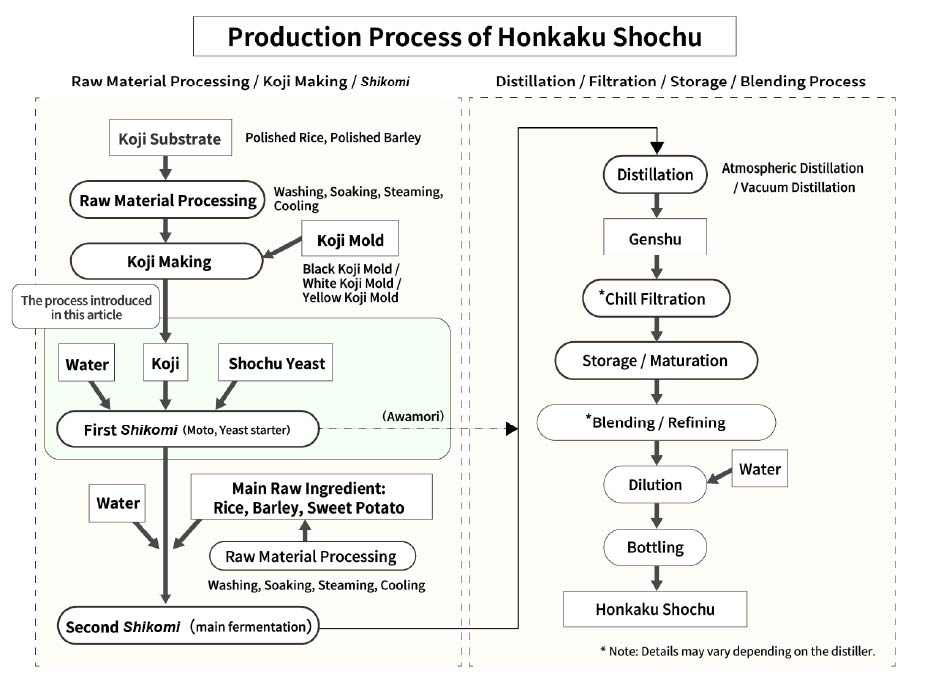
In the previous installment, we focused primarily on koji making, corresponding to “first koji” in the production process of honkaku shochu. We also discussed the treatment of barley—which significantly influences the quality of honkaku shochu—along with steaming methods and the koji mold used in seikiku (koji making).
Step 1: Koji substrate and polishing
Step 2: Raw material processing
Step 3: Seikiku (Koji Making)
In this installment, we turn to Step 4, “Primary Fermentation” (second moto), and Step 5, “Secondary Fermentation” (third brewing). These are the stages in which alcohol—the true essence of sake production—is finally created.
Step 4: Primary Fermentation (First Shikomi)
Primary Fermentation Corresponds to “Second Moto”: Propagating Yeast, the Principal Agent of Fermentation
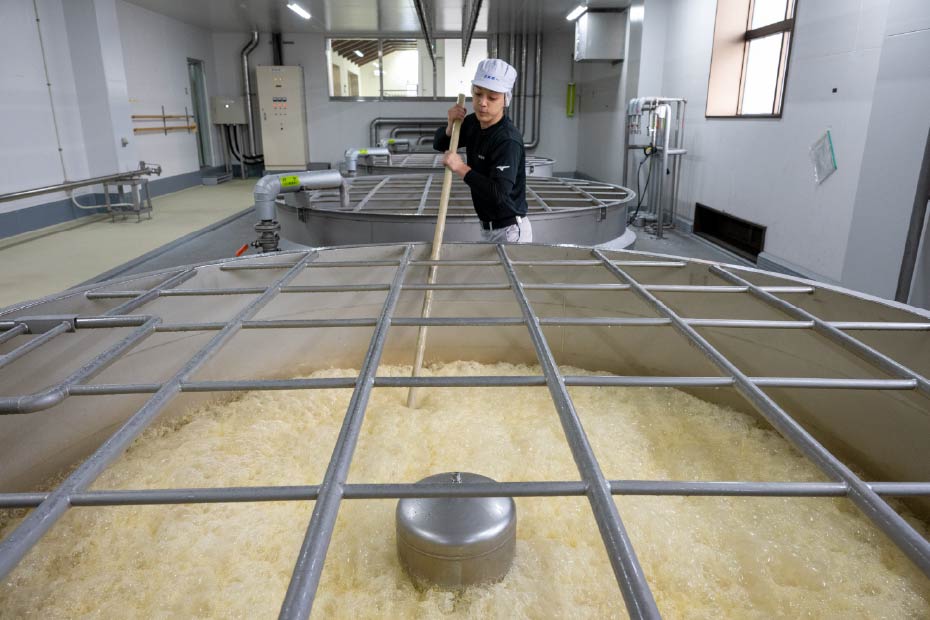
After cultivating koji mold on rice or barley to produce koji, the next stage is primary fermentation. Koji, water, and yeast are added to a fermentation tank designated for this stage. Using a long pole called a kaibo, the mixture is stirred from the bottom to ensure thorough blending. The resulting thick, semi-liquid mash—a mixture of solids and liquid—is called the moto, or primary moromi.⋆2
The objective of primary fermentation is to increase the population of high-quality yeast that forms the basis of alcoholic fermentation. This stage, known as “second moto,” is regarded as the second most important step after “first koji,” because it is extremely difficult to selectively propagate the desired yeast while simultaneously preventing contamination by unwanted microorganisms.
In modern honkaku shochu production, large amounts of citric acid produced by black koji mold and white koji mold are present in the koji. This acidifies the primary moromi, providing strong protection against microbial contamination (see Vol. 3 for details on black and white koji mold). Citric acid is an organic acid also found in lemon juice, and when the primary moromi is filtered, the liquid tastes distinctly sour.
⋆2 Moto, or primary moromi: also referred to as shubo (yeast starter).
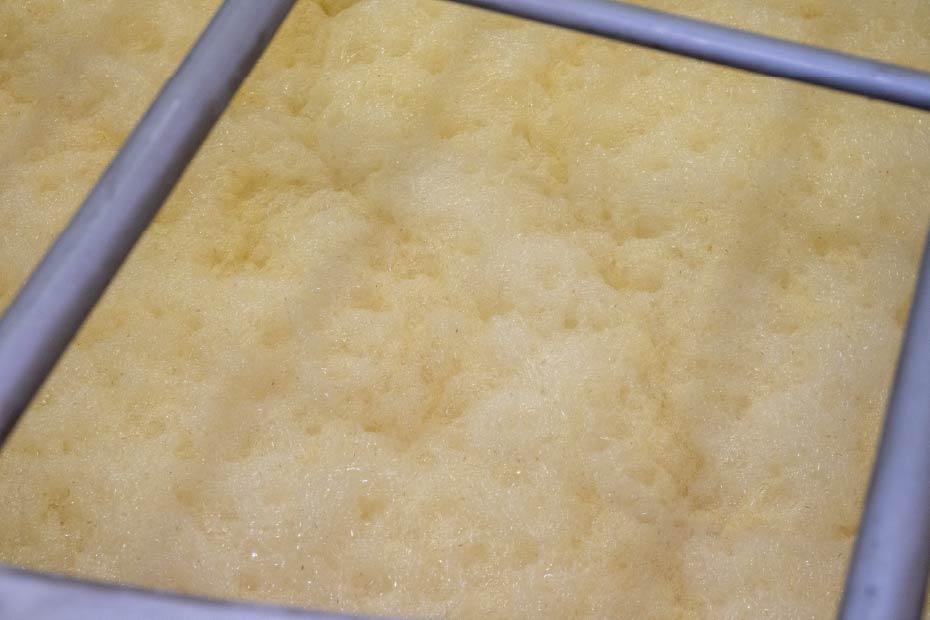
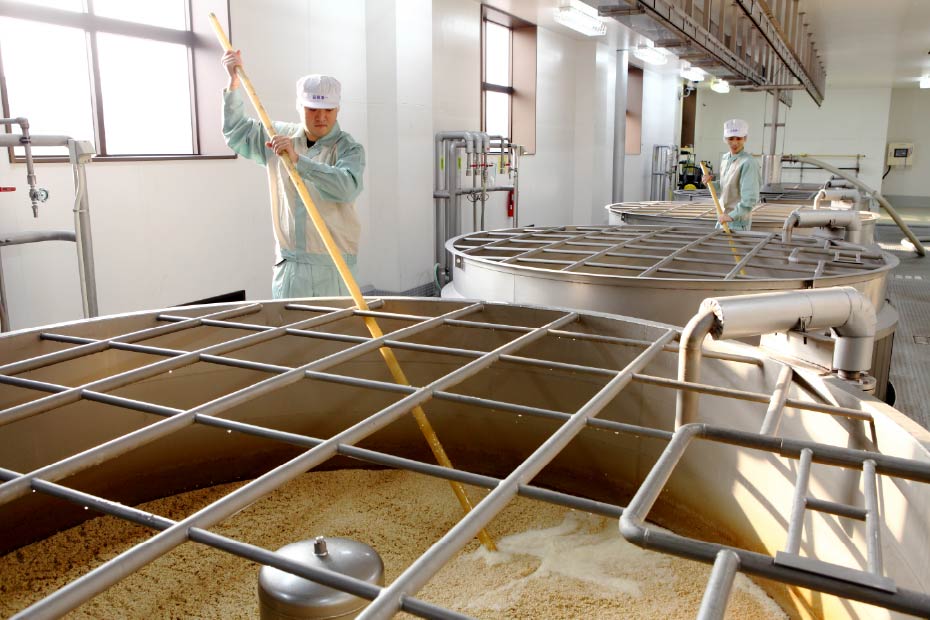
Once the koji, water, and yeast are combined, the proliferation of yeast—the principal agent of alcoholic fermentation—finally begins. In the past, brewers waited for kuratsuki (brewery-resident) yeast naturally inhabiting the brewery to multiply. Today, however, with the establishment of pure yeast culture techniques, a selected seed yeast (tanekobo) is added at the time of preparation. In honkaku shochu production, either commercially available yeast or proprietary strains developed by the manufacturer are used as seed yeast.
After five to seven days of fermentation in the primary fermentation stage, the resulting primary moromi typically reaches an alcohol content of around 16–18%. The liquid contains as many as 200 to 300 million yeast cells per milliliter, preparing it for the “main fermentation” of the subsequent secondary fermentation stage. The condition of this primary moromi has a significant impact on the fermentation of the secondary moromi that follows.
In Open Fermentation, Measures to Prevent Spoilage Are Essential
Throughout history, across both East and West, alcohol production has been carried out in environments of “open fermentation.” Sake and honkaku shochu are no exceptions. Open fermentation refers to conducting fermentation in tanks or vats that are not completely sealed, allowing exposure to the surrounding environment. Because the fermenting mash is in contact with the air, there is always a risk that unwanted microorganisms present in the brewery—or introduced by people or equipment—may enter, proliferate, and cause spoilage.
Immediately after preparation, various contaminating microorganisms compete within the moromi for an opportunity to multiply and dominate. To produce good sake, it is necessary to establish a “mechanism” that allows only beneficial microorganisms to thrive. During the Edo period,⋆3 the winter brewing method known as kanzukuri (cold-season brewing) was perfected for sake production. By utilizing lactic acid produced by lactic acid bacteria in the kimoto method (a traditional sake yeast-starter technique), brewers established a spoilage-prevention system that selectively encouraged the propagation of sake yeast.
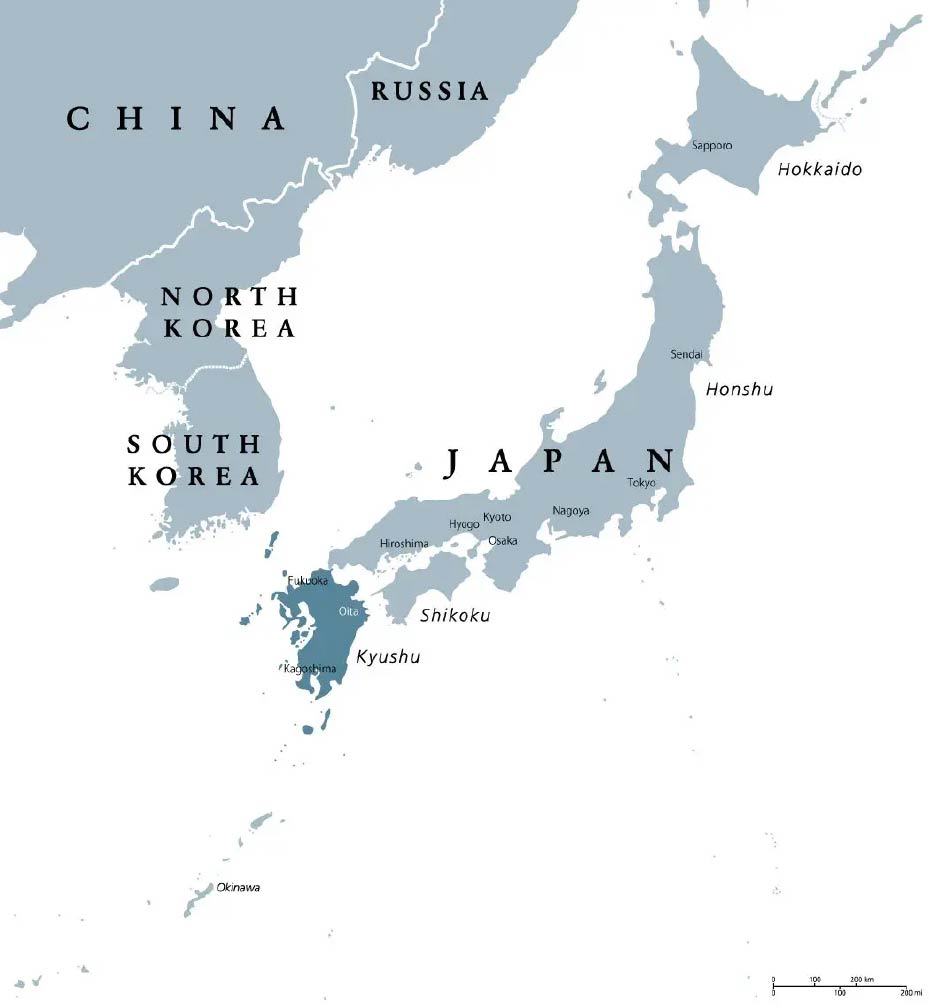
By contrast, in the warm climate of southern Kyushu, where true cold-season brewing was not feasible, sake production was plagued by chronic spoilage. Around 500 years ago, when distillation techniques were introduced, brewers began distilling the sake starter to recover and preserve high-proof alcohol as a distilled spirit. However, it was not until the technological innovations of the Meiji Restoration⋆4 (early 1900s)—with the emergence of black koji mold and the second shikomi (secondary fermentation) method—that southern Kyushu’s distinctive spoilage-prevention “mechanism” capable of guiding healthy fermentation was fully established (kanzukuri and kimoto, as well as black koji mold and the secondary fermentation method, will be explained in detail in the next installment).
⋆3 Edo period: A period in Japan lasting from the early 17th century to the late 19th century, characterized by a military-based government. It was also an era in which nationwide governance systems were established, urban populations grew, and popular culture flourished.
⋆4 Meiji Restoration: A political and social upheaval in Japan in the late 19th century that accelerated modernization, as Western science, culture, and ideas were actively incorporated.
Viewed from the perspective of spoilage prevention, different alcoholic beverages around the world employ different strategies. In wine—like sake, a brewed beverage—spoilage is prevented by adding sulfites to suppress the growth of unwanted microorganisms and inhibit oxidation. In beer, the risk of spoilage is eliminated through boiling sterilization of the wort, the antimicrobial properties of hops, and fermentation conducted in a sealed environment. Whisky, a distilled spirit like honkaku shochu, is also produced using open fermentation. However, by adding a large quantity of yeast at the start of fermentation, brewers ensure a rapid and vigorous onset of fermentation. Because fermentation is completed within a relatively short period—typically 50 to 60 hours—the influence of contaminating microorganisms is kept to a minimum.
Three Essential Conditions for “Good Yeast” in Honkaku Shochu Production
With few exceptions, the yeast used in alcohol production belongs taxonomically to the species Saccharomyces cerevisiae. However, even within the same species, individual strains possess distinct strengths and characteristics. Different strains are used for sake and for shochu.
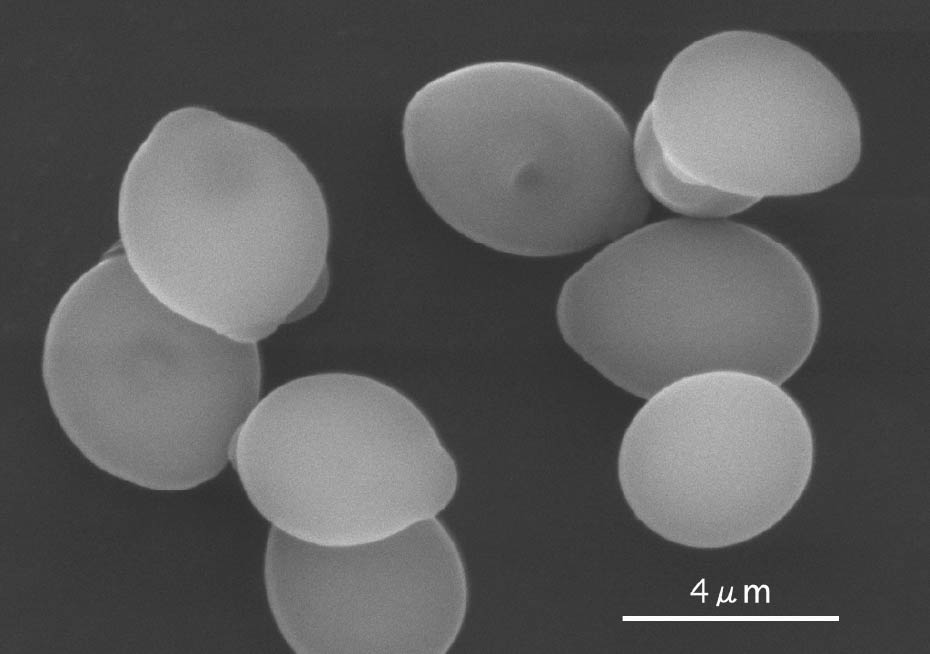
In shochu production, there are three essential conditions that define a “good” yeast. First, it must be capable of rapidly proliferating and initiating fermentation in the acidic environment of the primary moromi, which contains citric acid. For this reason, shochu yeast is typically isolated from high-quality shochu moromi—such as those used for awamori, imo shochu, or rice shochu—or from related lineages.
Second, it must sustain its fermentative power through to the end of the secondary moromi stage. In parallel multiple fermentation (to be discussed in detail next time), saccharification and fermentation proceed simultaneously. A good yeast strain can continue fermenting vigorously even when alcohol levels exceed 15–16%, without being inhibited by the alcohol it has itself produced.
Third, yeast generates a variety of aromatic and flavor-active compounds during fermentation. One important condition is that the distilled base spirit obtained afterward must be of high quality. Some yeast strains may produce undesirable components or result in poor flavor balance.
At Sanwa Shurui, we initially used commercially available yeast. Today, however, we employ the iichiko yeast, which I isolated,⋆5 as well as proprietary strains developed in-house. The iichiko yeast originated as a naturally mutated strain of a commercially available yeast known as Kagoshima yeast, which took up residence in our production facility. It is characterized by particularly vigorous fermentation and strong proliferative capacity. This yeast was also mentioned in Vol. 1,
⋆5 Isolation: The process of separating and cultivating a specific microorganism in pure form from a mixed population of microorganisms with differing characteristics.
⇒Vol. 3: “First Koji” Part 2 — Black Koji Mold and White Koji Mold, the Saviors of Honkaku Shochu
Main references: Honkaku Shochu Seizo Gijutsu (Honkaku Shochu Production Technology, Brewing Society of Japan, 1991); Sake-zukuri no Hanashi (Stories of Sake Brewing) by Yuichi Akiyama (Gihodo Shuppan, 1983); Hakko to Jozo II (Fermentation and Brewing II), edited by Kazuo Azuma (Korin Publishing, 2003); Sekai no Spirits: Shochu (Shochu: Spirits of the World) by Akira Sekine (Gihodo Shuppan, 2005); Shochu no Rirekisho (The Resume of Shochu) by Yoshihiro Sameshima (Ikaros Publications, 2020).