
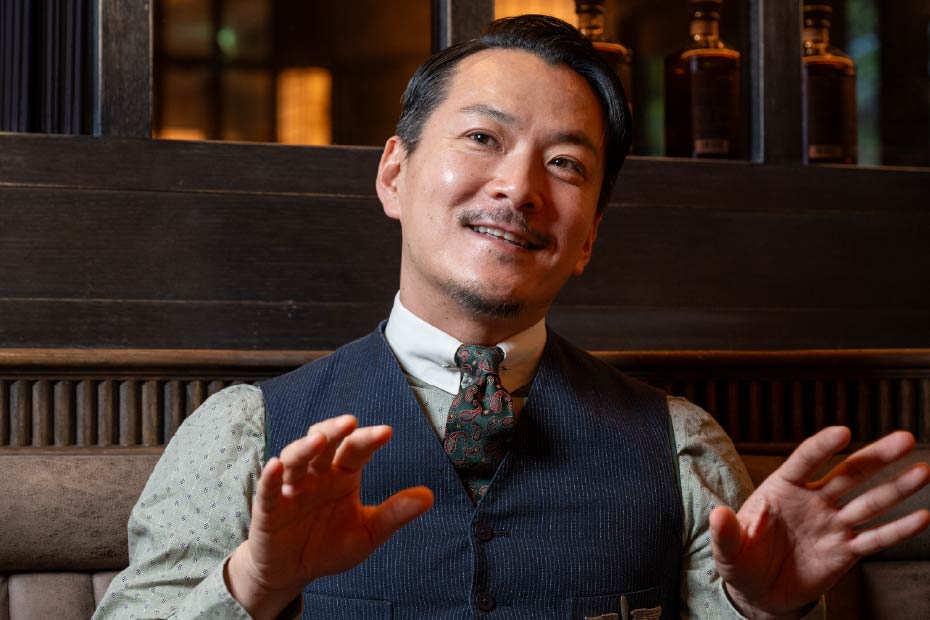
- Shingo Gokan
- Founder of SG Group
- Born in 1983 in Kanagawa Prefecture. Gokan began his career as a bartender in 2001. In 2006, he moved to the United States on his own and became the fourth head bartender of the renowned New York bar Angel’s Share. In 2012, he won both the US and global finals of the Bacardí Legacy Cocktail Competition. After opening Speak Low in Shanghai, China, in 2014, he went on to launch a succession of bars with new concepts in Japan and overseas. In 2017, he received the International Bartender of the Year at Tales of the Cocktail® (TOTC), often described as the Academy Awards of the bar industry. He subsequently received the Altos Bartenders’ Bartender Award, the highest individual honor presented by Asia’s 50 Best Bars and selected by fellow bartenders, in 2019, and the Roku Industry Icon Award, which recognizes an individual who has had a major impact on the industry, in 2021. In 2026, his New York bar Sip & Guzzle was ranked No. 1 in North America’s 50 Best Bars. Known for his bold ideas and drive to bring them to life, Gokan is a trailblazing figure in the bar industry both in Japan and internationally.
Insights
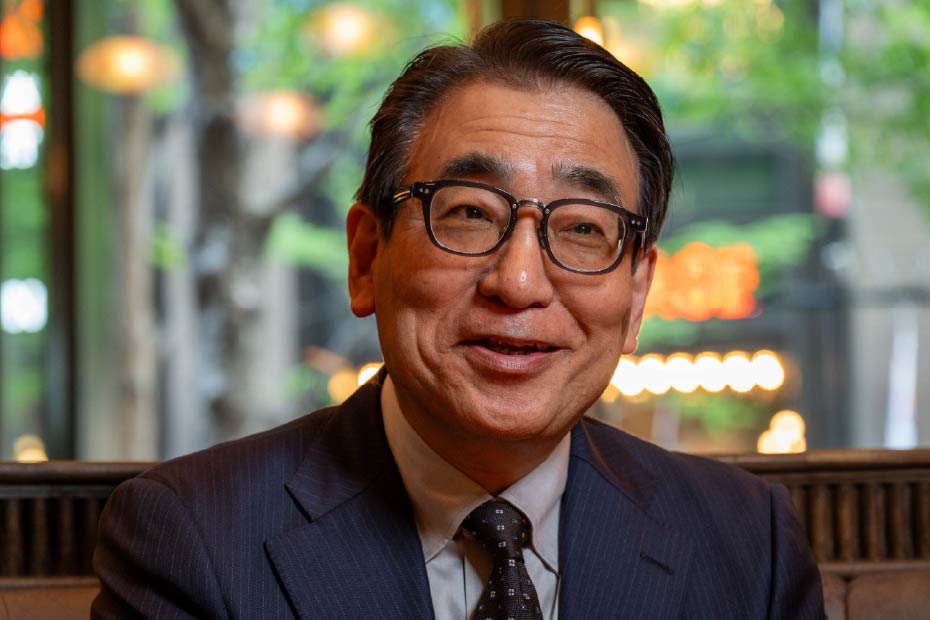
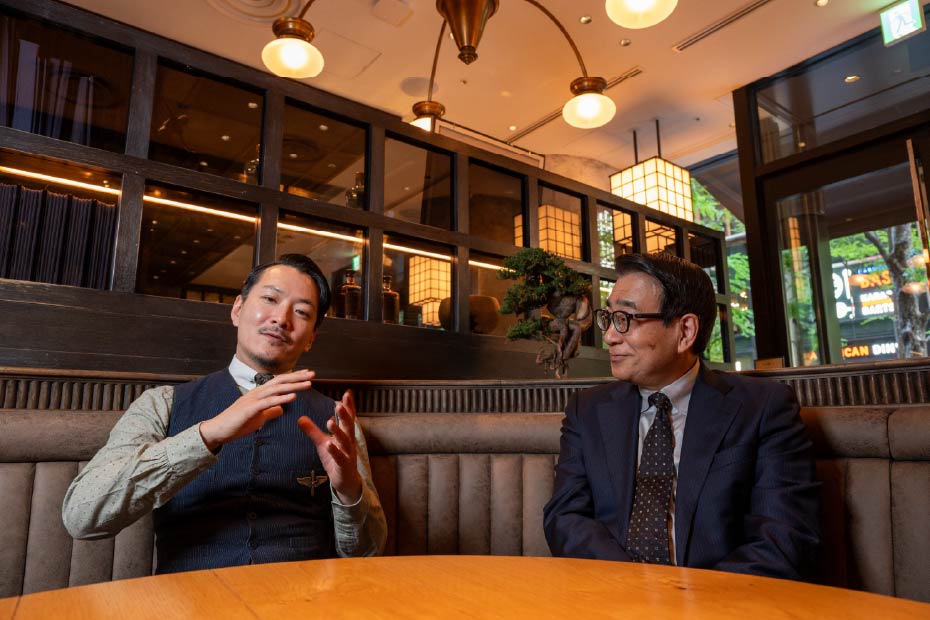
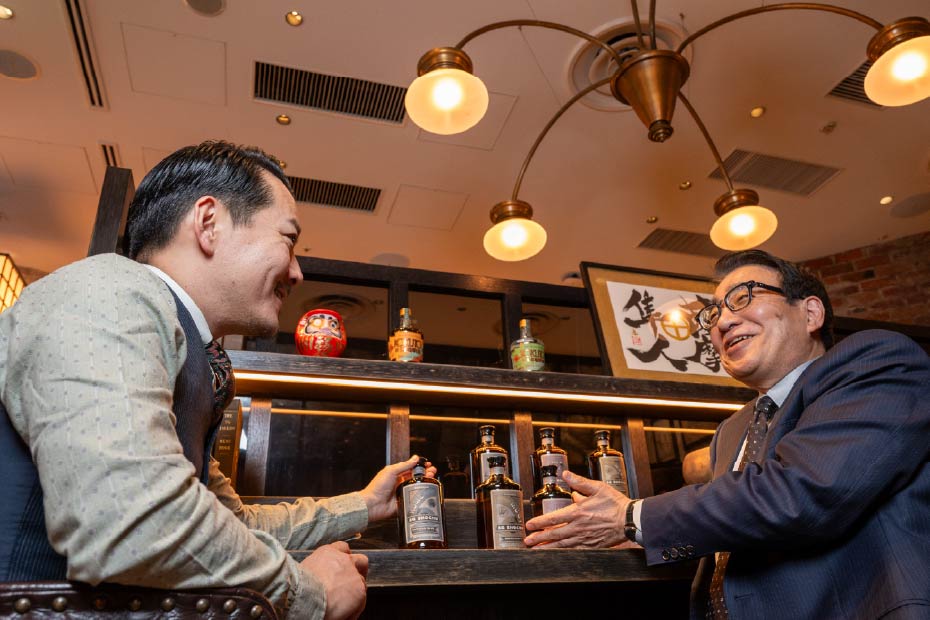
In Conversation Shingo Gokan, Bartender and Founder of SG Group × Masahiko Shimoda, Advisor to Sanwa Shurui
Dr. Shimoda’s New Theory of Honkaku Shochu
Taking Honkaku Shochu Global through the Bar Scene
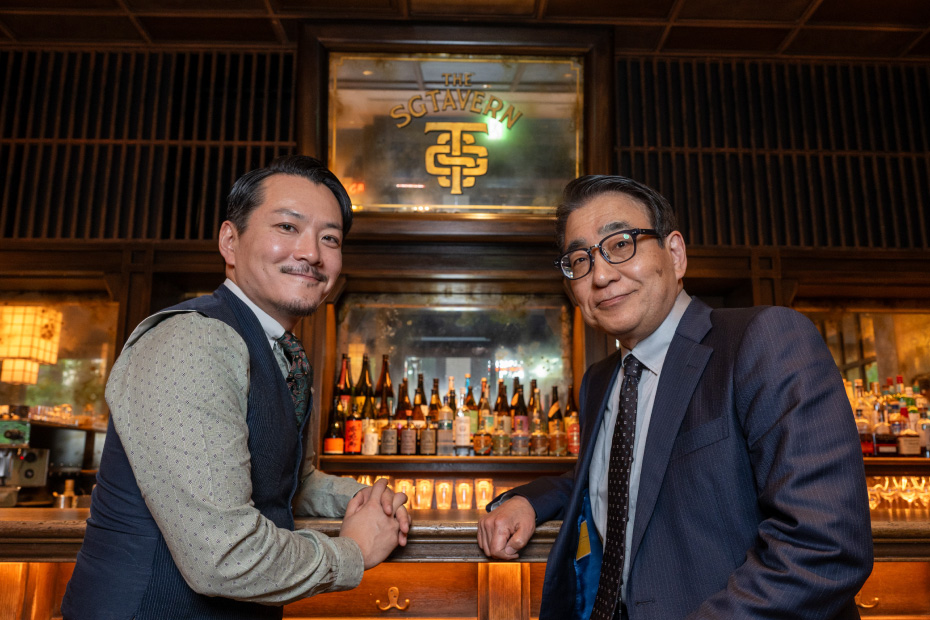
Text: Kenji Inoue / Photography: Koichi Mitsui / Composition: Contentsbrain / English Translation: LIBER
Honkaku Shochu Is Gaining Remarkable Recognition in the Global Bar Scene
From your perspective as someone deeply familiar with the global bar scene, how is honkaku shochu perceived overseas?
Shingo Gokan (hereafter, Gokan): It was exactly 20 years ago, in 2006, that I moved to the United States. I was working at a Japanese-style bar in New York called Angel’s Share.*1 One day, I asked one of my senior colleagues, “How should I explain shochu in English?” He told me, “Just call it Japanese vodka.” Looking back, that's a pretty absurd thing to say—adding "Japanese" to a spirit that originated in Russia. Compared with those days, however, understanding of shochu in the global bar scene has advanced tremendously.
*1 Angel’s Share: A legendary Japanese-style bar that opened in 1993. Distinguished from typical American bars of the time, it pioneered a quiet, intimate style of cocktail service and has produced many renowned bartenders, including Shingo Gokan.
Masahiko Shimoda (hereafter, Shimoda): Can people now understand what you mean if you simply say “shochu”?
Gokan: Yes. To explain it in English, I would call it a traditional Japanese spirit, and for barley shochu, I would add that it is made from barley.
At least among bartenders in New York today, if someone did not know about honkaku shochu, the reaction would be, “What, you’ve never heard of it?” The same applies outside the United States. At any top-tier bar featured in The World’s 50 Best Bars, you will invariably find at least one cocktail made with honkaku shochu on the menu.
I think a major driving force behind this was Sanwa Shurui’s launch of iichiko Saiten in the United States. To raise wider awareness of honkaku shochu, it is particularly important in the United States to gain recognition among bartenders. An effective strategy is to first build awareness among industry professionals such as bartenders and liquor retailers, who can then introduce honkaku shochu to consumers.
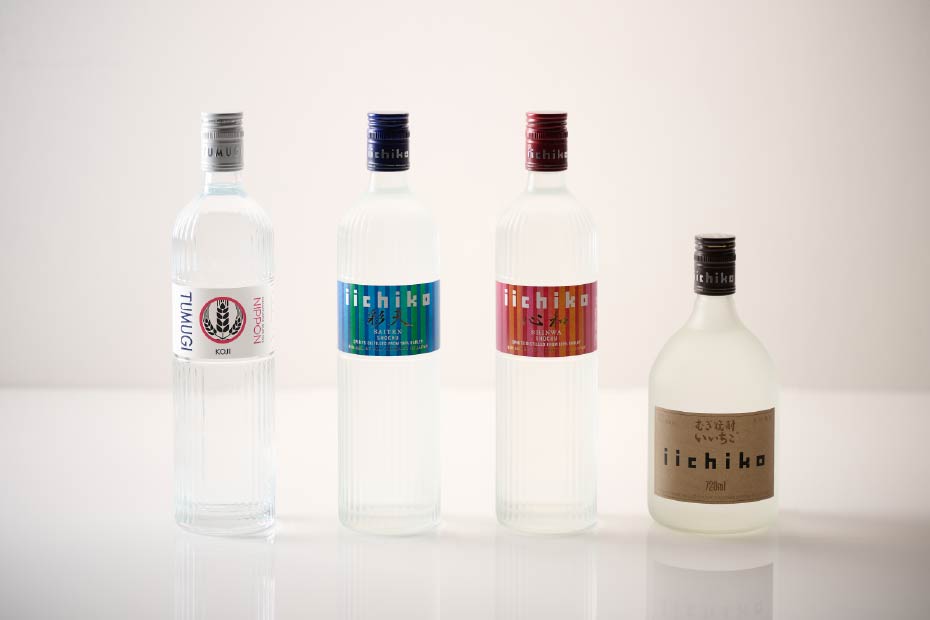
Shimoda: We followed the same strategy with iichiko Saiten.
Gokan: Bar culture in the United States is so well established that even bartenders at sports bars can make a full range of cocktails. If honkaku shochu can gain that level of acceptance, it will become much more widespread in the United States, and that, in turn, will help it spread around the world.
Shimoda: What about koji?
Gokan: Compared with honkaku shochu, koji is still not widely known. That said, there is a growing perception overseas that Japanese ingredients such as yuzu and matcha are cool. As a result, I get the impression that awareness and understanding of koji are gradually spreading among chefs and bartenders.
The Essential “Fruit Character” of a Cocktail Base
What is needed for honkaku shochu to gain wider recognition among bartenders?
Gokan: What is essential is a fruit character. There are probably no cocktails that contain no fruit element at all. A gin and tonic, for example, includes lime, while even a simple cocktail such as an Old Fashioned is garnished with orange peel.
A drink comes together because the base spirit itself has a fruity character and further fruit nuances are then layered onto it. Simply mixing disparate elements without bringing them together would not make a good drink.
Vodka, for example, is a popular cocktail base, but it is almost pure alcohol, with virtually none of the flavor of its ingredients and little fruit character. I think what today’s bartenders are looking for is something closer to honkaku shochu than vodka. Honkaku shochu has a complexity that vodka lacks, and that gives it an advantage as a cocktail base.
Shimoda: That is very encouraging to hear. Sake serves as a model for honkaku shochu. The ginjo aromas*2 found in sake, reminiscent of banana and pineapple, can also be detected in iichiko, and we even have a product made using barley for the koji that has been polished more than usual to maximize its fruity aroma.
*2 Ginjo aroma: The fruity aroma generally produced in sake by extensively polishing the rice and fermenting it slowly at a low temperature.
Gokan: It would be interesting to make a cocktail with that.
The Potential to Break Through as the “Next Mezcal”
Shimoda: To me, cocktails made with Western spirits generally have a dry, sharp character. I see it as a culture that emphasizes a clean finish, with little lingering aftertaste.
Cocktails made with honkaku shochu, however, are rich and leave a lingering finish. I think that is a positive quality when they are enjoyed with food, but could it be a disadvantage in the bar scene?
Gokan: That is an interesting perspective. Globally, there was once a preference for sharp cocktails with little lingering finish. However, that trend is changing, and more cocktails now have a long, lingering finish. I get the sense that bartenders and drinkers alike are becoming more open-minded, with a broader range of styles being accepted.
Shimoda: I’m relieved to hear that. (Laughs)
Gokan: A good example is sherry, which I’m particularly fond of. In the past, only dry styles such as Fino*3 were used in cocktails, but today even rich, sweet Pedro Ximénez*3 is making its way into cocktails.
*3 Fino and Pedro Ximénez: Both are types of sherry. Sherry varies in flavor depending on the grape variety and production method and is classified into a wide variety of styles. Fino is light-bodied and dry, while Pedro Ximénez is intensely sweet.
Shimoda: I'm a great fan of sherry myself.
Gokan: Beyond sherry, spirits from Latin America that have become increasingly popular in the bar scene over the past few years—such as pisco from Peru and Chile and cachaça from Brazil—also tend to have distinctive flavors and a long finish.
Shimoda: I'd love to compare them side by side.
Gokan: Among Latin American spirits, the one I personally believe could serve as a benchmark for honkaku shochu is Mexican mezcal. Around the world today, mezcal is a hugely popular distilled spirit. Ever since I developed The SG Shochu,*4 I've believed that honkaku shochu has the potential to become the "next mezcal."
*4 The SG Shochu: A cocktail-focused honkaku shochu developed by Gokan and launched in 2020 for the bar industry. It is available in three expressions—KOME, MUGI, and IMO—with Sanwa Shurui collaborating on the development of MUGI. Shimoda was president of Sanwa Shurui at the time.
Mezcal is a traditional distilled spirit made from the agave plant. Tequila, in particular, is produced from the blue agave variety.
Gokan: That's right. When I moved to the United States 20 years ago, you couldn't find mezcal in bars. Now it's the opposite—you'd be hard-pressed to find a bar, even in the United States, that doesn't carry mezcal. It's been one of the biggest success stories in the spirits world over the past two decades.
Shimoda: What do you think made it so successful?
Gokan: Its intensely smoky, distinctive flavor, which comes from roasting the raw ingredients, really resonated with both American consumers and bartenders, who tend to enjoy bold, robust flavors. Another attraction is the diversity of its ingredients and production methods, making it an inspiring spirit for bartenders to work with creatively.
Shimoda: I've heard that mezcal has a long history dating back to the 16th century. Honkaku shochu has a similarly long history and tradition, with tremendous diversity in both its production methods and ingredients. Looking around the world, I don't think there's another distilled spirit with terroir*5 as rich or stories as compelling as those of honkaku shochu. That gives it tremendous potential to become the next mezcal.
*5 Terroir: A concept referring to the combined influence of factors such as climate, soil, topography, and human activity on the flavor and character of a product. The term is most commonly associated with the growing conditions of grapes for wine.
Advancing toward a World-Class Spirit under the Banner of “A Tradition in Evolution”
In March 2026, AWAMORI DE LEQUIO, an awamori newly developed by Gokan as a cocktail base, was launched. Awamori is a traditional distilled spirit from Okinawa that, like honkaku shochu, is made using koji mold.
Shimoda: When I learned what “LEQUIO” meant, I thought it was such a clever and very Gokan-like name.
Gokan: Thank you. “LEQUIO” is an old foreign-language term referring to Ryukyu, the former name of Okinawa. For now, it is available only in Japan, but we plan to launch it in the United States, China, and other markets in the future.
Shimoda: Was it difficult to develop awamori as a cocktail base?
Gokan: It was. Awamori has a distinctive mushroom-like character reminiscent of matsutake and truffles. That mushroom note pairs terribly with fruit, which is so important in cocktails. It really does not work with flavors other than coffee and nuts.
However, by using a new natural yeast called sakura yeast, we were able to create an entirely new type of awamori with floral notes that also pairs well with citrus fruits. Sakura yeast was isolated from Okinawan cherry blossoms by Akira Nakazato, chief distiller at Mizuho Shuzo, the Okinawan awamori producer that collaborated with us on its development.
Shimoda: In that case, it can work in cocktails as well.
As you develop Japanese spirits with long traditions, such as honkaku shochu and awamori, into the new category of cocktail bases, is there a guiding philosophy that you consider particularly important?
Gokan: If you look closely at the label of The SG Shochu, you'll see the words “A TRADITION IN EVOLUTION.” I don't believe traditions endure simply because they remain unchanged. They endure because they continue to evolve with the times. I see developing products for use as cocktail bases as part of that ongoing evolution.
Shimoda: “A Tradition in Evolution” is a wonderful phrase. I couldn't agree more. One of the key messages I've emphasized throughout this series is that honkaku shochu has never rested on its traditions. It has continued to evolve without standing still. Not only its production methods, but also the ways in which it is enjoyed can continue to evolve. I believe that flexibility is what will ensure that Japan's traditional spirits continue to be appreciated for generations to come.
Gokan: Even vacuum distillation, which is taken for granted today, must have faced opposition at first, with people saying, “Outrageous. That's not shochu.” I'm sure there were plenty of producers who also found the idea of shochu with soda rather unsettling. (Laughs)
Shimoda: In the past, honkaku shochu typically had a higher alcohol content of around 35%, so it was traditionally sipped little by little from small cups. Later, in an effort to crack down on illicitly produced spirits, 25% and 20% became the standard alcohol strengths, giving rise to ways of enjoying shochu such as oyuwari (mixed with hot water) and mizuwari (mixed with water). I believe the potential of honkaku shochu as a cocktail base is a natural extension of its remarkable versatility and its ability to be enjoyed in so many different ways.
Gokan: Once honkaku shochu becomes established in countries such as the United States as a base for cocktails enjoyed mainly before or after meals, we can then say, “In Japan, where it originated, there are also traditional ways to enjoy it. And unlike other spirits, it also excels as a drink to pair with food.” That alone effectively doubles the size of the market. I think it's the right strategy to keep that broader potential in reserve for the time being and first introduce honkaku shochu to the world through cocktails, where it is more readily accepted.
Shimoda: Hearing you say that is tremendously encouraging. Thank you very much for sharing your insights with us.
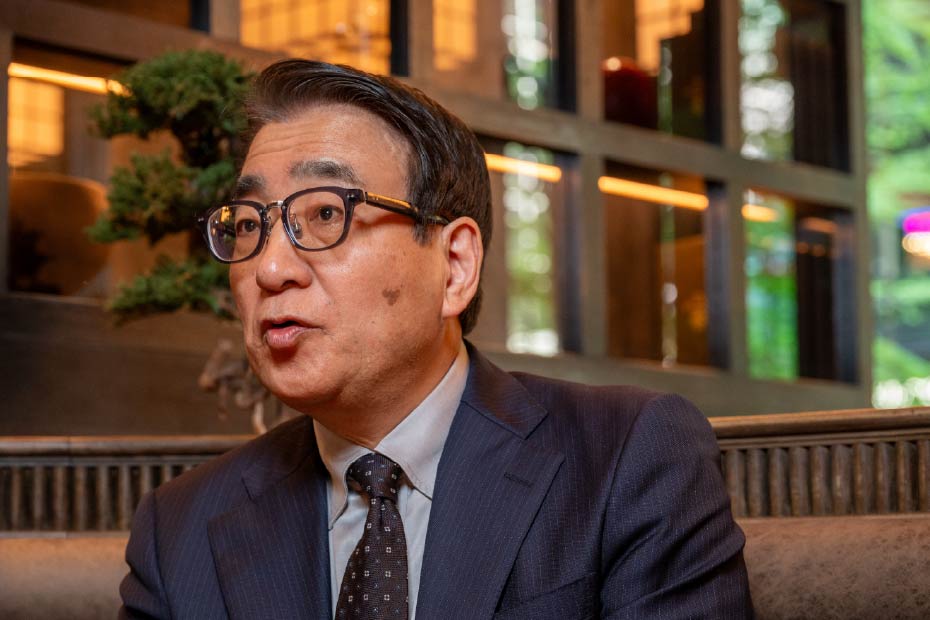
- Masahiko Shimoda
- Advisor, Sanwa Shurui Co., Ltd. / Doctor of Engineering
- Born in 1955 in Bungo-Ono City, Oita Prefecture. After graduating from the Department of Fermentation Technology, School of Engineering, Osaka University, he worked for a sake brewery in Hyogo Prefecture. In 1984, he returned to Oita and joined Sanwa Shurui. While engaged as a technical specialist in shochu production technology development, product development, and quality control, he earned his Doctor of Engineering degree from Osaka University in 1998. Appointed to the Board of Directors in 1999, he became the company’s first president from outside the founding family in 2017, and was appointed Chairman in 2023. He has served as Advisor since October 2025.
