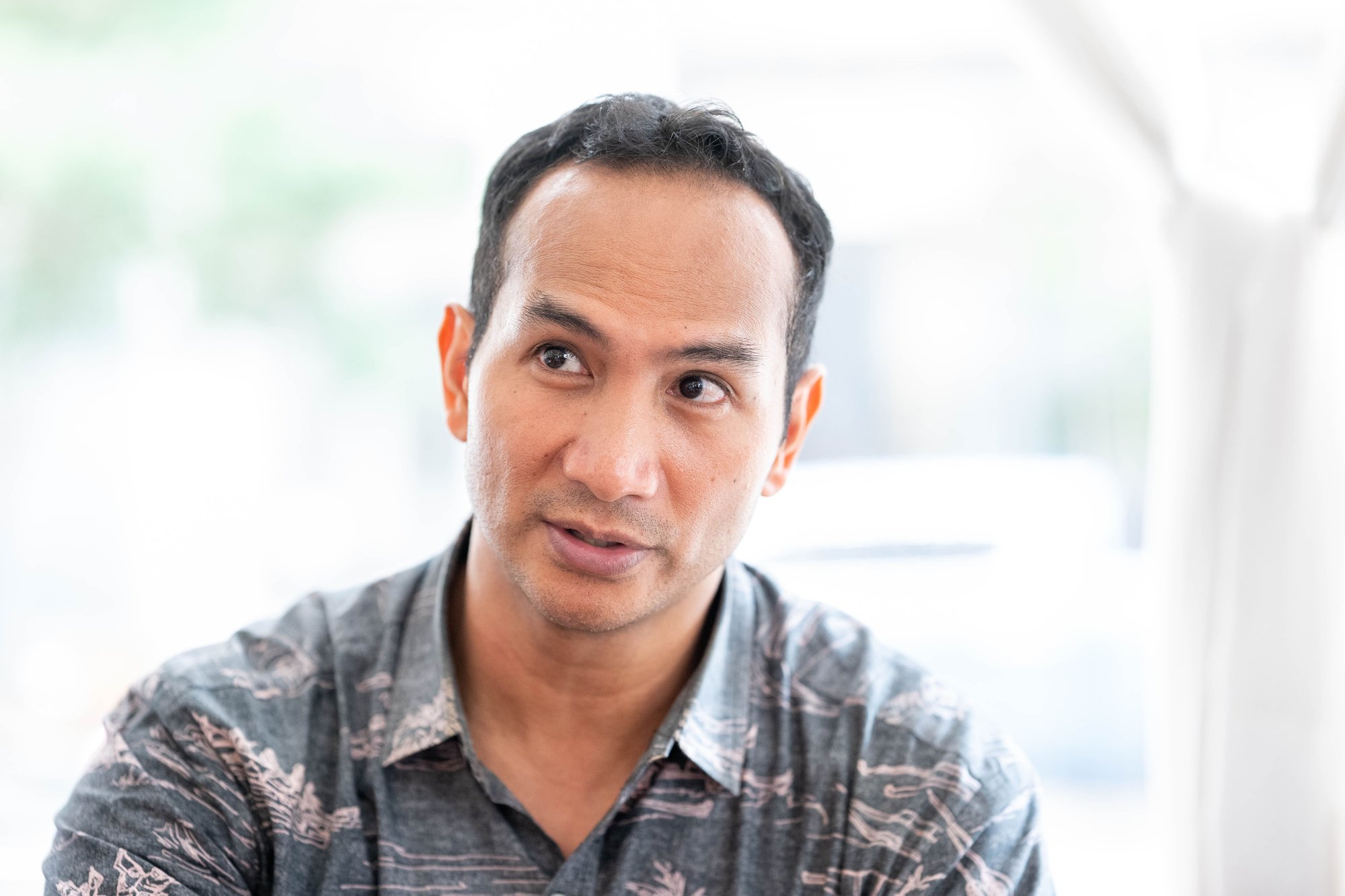
- Kevin Diedrich
- Owner-bartender at Pacific Cocktail Haven(P.C.H.)Born in Virginia. After working as an IT engineer, Diedrich kicked off his bartending career in 2001 at the Ritz-Carlton in Washington, D.C. In 2005, he transferred to the hotel’s San Francisco location. Brushed up his techniques by working two-and-a-half years as a barback at Clock Bar, Cask, and Bourbon & Branch. Moved to New York in 2009, where he worked at PDT and Clover Club, renowned bars that combined classic styles with innovative twists. Opened Pacific Cocktail Haven (P.C.H.) with his cofounder in 2017. P.C.H. was selected among “The World’s 50 Best Bars” in 2018 and 2019. At the 2020 Tales of the Cocktail®, P.C.H. was named “Best American Cocktail Bar” and Diedrich was “Best American Bartender.” In 2021, a fire forced P.C.H. to close, but it reopened at a new location in 2022 to mesmerize its many fans yet gain. More recently, P.C.H. was named among “North America’s 50 Best Bars” in 2023 and 2024.
with Bartender
Exploring the journeys and the thoughts that shape globally active bartenders behind the bar.
2026.06.03
Kevin Diedrich
Experimenting with Distinctly Flavored Shochu Makes Mixology Very Fun
Kevin Diedrich opened Pacific Cocktail Haven (P.C.H.), a popular San Francisco bar, in 2017. Since then, he has won accolades for running one of “The World’s 50 Best Bars,” and he has been recognized for running the “Best American Cocktail Bar” and being the “Best American Bartender” by Tales of the Cocktail®. Diedrich is a regular among the top award contenders, this year being no exception. The owner bartender has also garnered popularity for being one of the first in the U.S. to put drinks made with Honkaku Shochu (single distillation shochu) on the menu.
Text: Akira Suzuki / Photography: Koichi Mitsui / Composition: Contentsbrain /
English translation: LIBER
Interview Location: Kenji and Loa Bar, both located on the first floor of the International House Hotel at 221 Camp Street, New Orleans, Louisiana 70130, U.S.A.
No Other Spirit Contains the Stimulating Savoriness of Koji
――One of the big differences between shochu and spirits like gin, vodka, and tequila is that producing shochu involves the use of koji. As a koji expert, what do you think is the appeal of using it?
What makes shochu so different from other spirits are the flavor and aroma coming from the koji. The umami really stimulates the taste buds. This creates a wonderful combination. No other spirit contains the stimulating savoriness of koji. Experimenting with the distinct flavor makes mixology very fun.
――Japanese people are familiar with the distinctive aroma of drinks and condiments made with koji, such as amazake, miso, and soy sauce, but how do Americans react to them?
I think they have a good reaction when koji is used in cocktails. When American connoisseurs of alcoholic beverages taste the unique elements and freshness of koji in a cocktail, a drink they’re familiar with, it’s very appealing and intriguing to them.
――Until recently, many people would have recoiled uncomfortably at the mention of a microorganism called koji mold. How about now?
I think the general American public is becoming more aware of the fact that fermentation with koji mold is part of making miso, soy sauce, shiokoji,and other seasonings and condiments. More and more people are also learning that yeast, which is also microorganisms, is used with sugar to produce the alcohol in spirits. In the case of shochu, koji mold acts on starch to convert it into sugar. This is the preliminary stage of alcohol fermentation. If you explain each step of the process, then you can dispel any misconceptions about fermentation with koji mold.
――In that case, it’s important for a bartender to share information with their customers.
That’s true. First, the bartender needs to gain knowledge. When you have a solid grasp, then you can talk with customers and expand their knowledge.
When I Find Something Unique,I Ponder It
――We heard you were one of the few top bartenders who appreciated shochu soon after Sanwa Shurui started exporting it to the States.
My wife is actually Hawaiian of Japanese descent, so we often visited Tokyo and I already had experience drinking different types of shochu. My first impression was that because of koji’s aroma, it reminds me of sake a little bit. Of course, the taste is different from sake, but it was very deep. When I drank it in Japan, it was almost always mixed with soda or served straight, so it was a challenge for me to make a new cocktail with shochu.
When I started mixing my own shochu cocktails, they had a unique character I hadn’t sensed with other spirits and I really liked them. When I find something that’s unique, I like to ponder it and experiment with it over and over again to understand its flavor. I’ve always liked experimenting with the unfamiliar.
I Decided to Keep Bartending Because It’s Fun
――Let me ask about you, Kevin. What made you want to become a bartender?
That’s a really long story... I’ll make it short. For five years I worked with IT and computers. I was an engineer in charge of centralized network management. I worked in a room with a big map of the U.S. with lights on it. As soon as a light switched from green to red, I would contact somebody in that state and deal with their problem. I was still 20 or 21 years old.
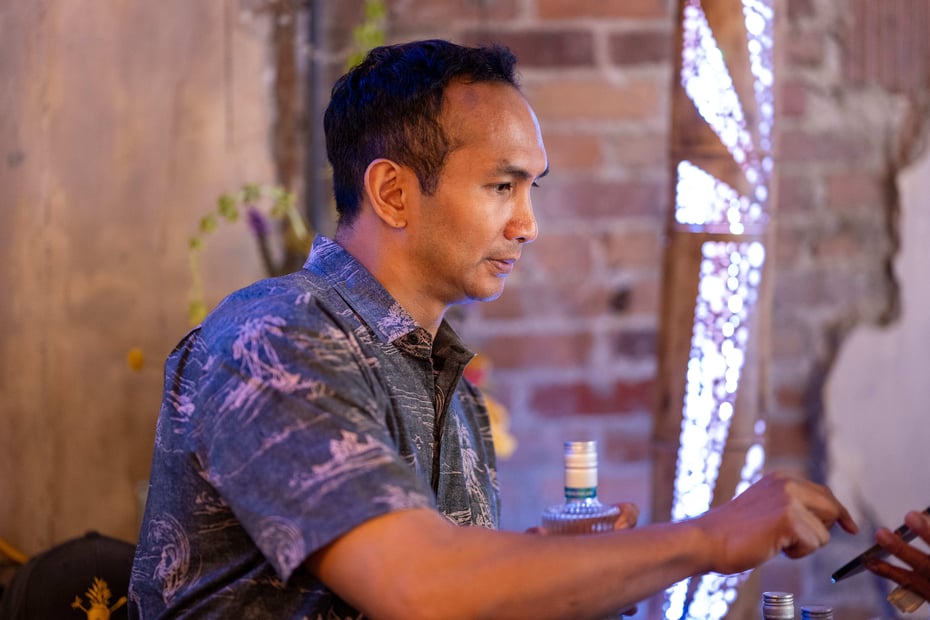
I grew up in D.C. My best friend and roommate was a DJ, and my girlfriend at the time was a bartender. I would party with them almost every night. It was so much fun I decided I wanted to work in a bar, too, so I quit my job as an engineer and went to bartending school. But since I didn’t have any experience working in a bar, it was hard to find a job. Fortunately, my girlfriend’s acquaintance gave me an introduction that landed me my first bartending gig at the Ritz-Carlton in D.C.
――And then you were a bartender!
Yep, that was the beginning. I was still 22, so basically a kid. In addition to the Ritz-Carlton, I worked at a nightclub on weekends. I did it because it was so much fun. After a while, the beverage manager at the Ritz-Carlton told me to start making cocktails, but I still didn’t know much about them back then.
That’s why I started reading books to study them. That was when I realized I didn’t know much about spirits in general, not just cocktails. So I started visiting other cities to research bars and cocktails. In the process, I decided to move to San Francisco to study spirits and bartending more in-depth.
――Why did you choose San Francisco?
I visited many cities, including New York and Chicago. But I grew up on the East Coast, so I wanted to go somewhere totally different. That’s why I requested a transfer to the Ritz-Carlton in San Francisco. In 2007, I bought a one-way ticket and moved there with all my belongings in three bags. Later, I returned to D.C., then moved to New York, and then again went back to San Francisco, where I went independent and opened my own bar, Pacific Cocktail Haven (P.C.H.).
There’s a Special Art to Serving Strangers Without Expecting Anything in Return
Pacific Cocktail Haven (P.C.H.) has won accolades for being one of “The World’s 50 Best Bars.” It was also the “Best American Cocktail Bar” at Tales of the Cocktail®, where owner bartender Kevin Diedrich has also been recognized as “Best American Bartender.” The bar’s popularity stems from its highly creative cocktails. We asked Diedrich about the pandemic’s impact on the bar business and its future.
Text: Akira Suzuki / Photography: Koichi Mitsui / Composition: Contentsbrain /
English translation:LIBER
Interview Location: Kenji and Loa Bar, both located on the first floor of the International House Hotel at 221 Camp Street,
New Orleans, Louisiana 70130, U.S.A.
After Renovating from Midnight to Dawn, I Opened for the Night
――So in 2017, you opened Pacific Cocktail Haven (P.C.H.) in San Francisco.
Actually, the first bar I opened in 2017 burned down in a fire in 2021 [and I opened the current one in 2022], but before that first one was destroyed, I’d bought the building in December 2015. It was a very old building in bad condition, so when I first bought it, I wasn’t sure what to do with the interior. In the meantime, I opened the bar as a temporary business.
It was in a really bad state, so I opened the bar from 5 p.m. to midnight. After closing, I would stay until seven or eight in the morning to strip the walls and renovate on my own, then tidy up the bar, do some prep work, and open up again at five. I lived like that for about six months. The renovations took about a year to finish, and in 2017, the bar was finally ready to open.
――You did the interior yourself?
Well, tearing down and stripping walls is easy. One day I’d tear down a wall, and the next day I’d work on another part. But the bar was open during the work, so customers would come and have fun seeing what was gone or different. Some people came there to drink just to see the bar change. (Laughs.) I did a lot of the other work myself, but I hired builders for the new parts. If I’d made the walls, they would have collapsed.(Laughs.)
――After you opened P.C.H., it was selected as one of “The World’s 50 Best Bars,” and in 2020 it was chosen as “Best American Cocktail Bar” at Tales of the Cocktail®. Then, your new bar was among “North America’s 50 Best Bars” in 2023 and 2024. Were these splendid achievements part of your plan?
No, I was surprised. I hadn’t even thought about it before. I do this because I like this business and I like hospitality. I wanted to be part of a community and be of use to the people here. I wanted to be a bartender and serve people.
One thing my wife loves to say is, “If you work hard and you’re kind to others, you’ll be fine.” That’s all there is to it. I’m here to work, not to impress people. I’m just doing my job. If I’ve had good results, it’s because I’ve had a lot of great people around me. Other people have always been contributing to my career advancement. I’ve been blessed with a lot of wonderful mentors and people who’ve helped me, and that’s why I’m here.
The Bar Business Lost Many Experienced People in the Pandemic
――What was the pandemic’s impact on the bar business?
A lot’s changed since before the pandemic. I think we’ve had a changing of the guard. We lost a lot of bartenders during the pandemic, many of them very experienced. Because of that, we’ve lost their guidance and mentorship. We lost those who would have been mentors to today’s young bartenders.
When I started out as a bartender, there were always more experienced ones working with me behind the bar, and I learned a lot from them. But during the pandemic, they closed their business, changed jobs, retired, or left the country.
This has created a huge gap between the experienced bartenders and the newcomers. There’s a lack of mentorship, and young bartenders don’t have the knowledge they need. They need successful role models to look up to, but without them, I can’t see them finding much success in the future. The professionals in my generation are nothing like the ones who came before us.
――What direction do you see the bar business going in now?
With regard to the future, I know we have a lot to do now. One big change is the presence of social media. Learning materials are also much more accessible now, because you can go online and learn all about recipes, techniques, and how to use new carbonated drinks.
When I was younger, if I wanted to know how to do something, I’d first have to find someone who knew, then somehow get their phone number or email address and contact them to ask. But now we have lots of people who I call “basement bartenders” or “Instagram bartenders.”
I’m a little reluctant to call them bartenders. Sure, they’re making cocktails, but they’re not really bartending. However, I do think social media is providing people with the resources to learn about cocktails and alcohol.
Even if you don’t go to a school or you don’t know certain people, if you open up YouTube or Instagram on your phone, you can learn cocktail techniques or research something new about alcohol. If you want to learn about shochu, sake, or spirits, it’s all on the internet in the palm of your hand. That’s the future, and I guess we have to adapt to it.
But, as I said before, I got into this work because I like this business and I like hospitality. I wanted to be part of a community and be of use to this place and the people here. I wanted to be a bartender and serve people. What’s important to me isn’t the drinks, but rather the customers I serve.
I think there’s a special art to serving strangers without expecting anything in return. In Japan, you have omotenashi, which is a wonderful approach to hospitality that is done without asking for anything in return, right? That’s what I want to do. I’m just running a bar with the spirit of omotenashi, and maybe there’s a future beyond that.